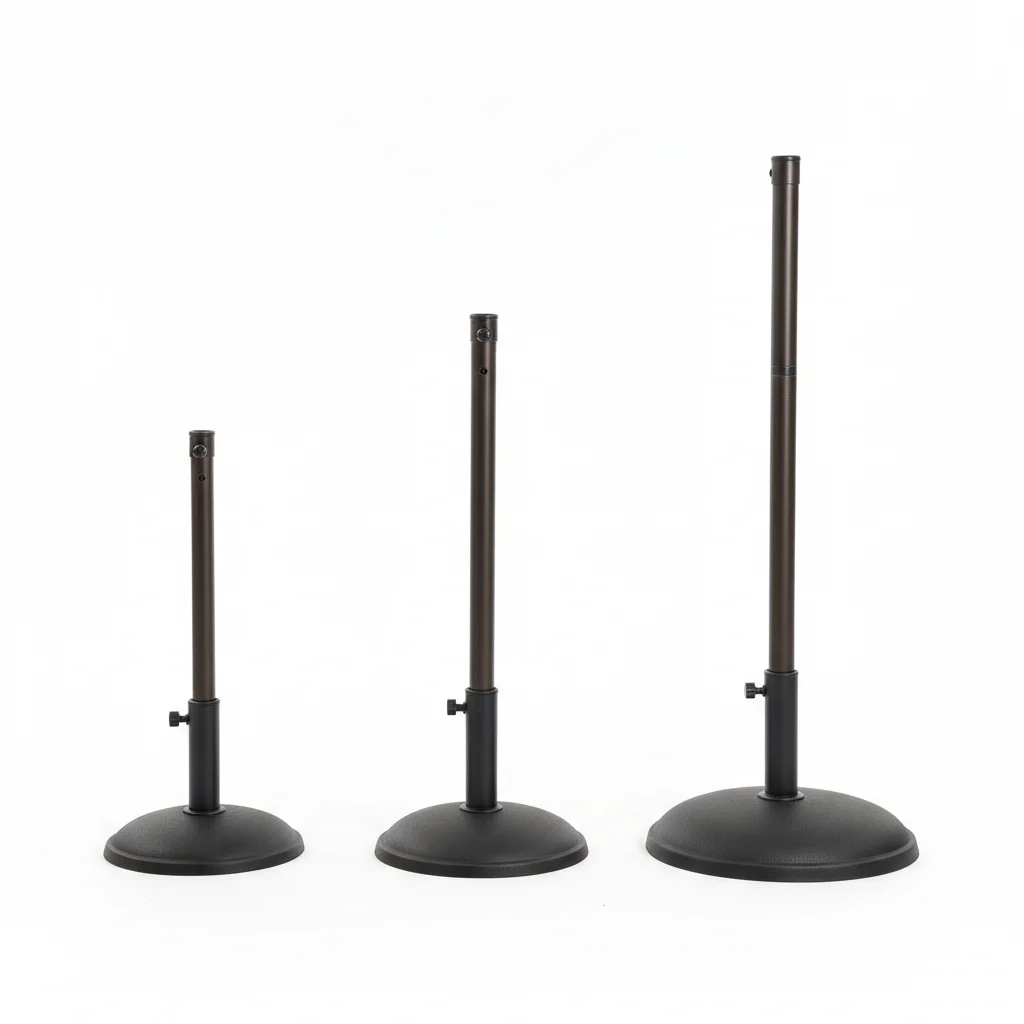
The diameter of your patio umbrella pole significantly impacts its overall stability, especially in breezy conditions. Generally, a larger pole diameter provides greater resistance to wind and offers a more robust foundation for the canopy. While smaller poles (around 1.5 inches) are common for lighter, more portable umbrellas, poles ranging from 2 to 2.5 inches in diameter offer superior stability for most residential and commercial settings.
Understanding Pole Diameter and Wind Resistance
A thicker patio umbrella pole inherently offers more structural integrity. This increased rigidity helps the umbrella withstand gusts of wind without wobbling excessively or tipping over. Think of it like a tree trunk: a thicker trunk is less likely to sway or snap in a storm. For areas prone to strong winds, prioritizing a larger pole diameter is a crucial factor in preventing damage and ensuring safety.
However, pole diameter isn’t the only factor. The material of the pole (aluminum, steel, wood) and the design of the base also play critical roles. A wide, heavy base paired with a thick pole creates the most stable setup.
Compatibility with Patio Tables and Bases
When selecting a patio umbrella, it’s essential to consider the compatibility of the pole diameter with your existing patio table and umbrella base. Most patio tables have a standard umbrella hole, but these can vary. Measure the diameter of your table’s umbrella hole before purchasing to ensure a proper fit. Similarly, umbrella bases are designed to accommodate specific pole diameters, often with adjustable inserts to secure different sizes.
Using an umbrella with a pole that is too small for its base’s opening can lead to instability, even if the pole itself is sturdy. Always ensure a snug fit to maximize the umbrella’s stability and prevent unnecessary movement.
Common Pole Diameter Sizes and Their Applications
|
Our Picks for the Best Patio Umbrella in 2026
As an Amazon Associate I earn from qualifying purchases.
|
||
| Num | Product | Action |
|---|---|---|
| 1 | AreShark 9FT Patio Umbrella with Solar Lights, 32 LED Lighted Pool Umbrella w/Tilt and Crank, Outdoor Market Solar Umbrellas for Garden, Deck, Backyard, Pool and Beach, Light Gray |

|
| 2 | MASTERCANOPY Patio Umbrella 9 ft Replacement Canopy for 8 Ribs-Burgundy Canopy Only |
|
| 3 | Kingdura 9ft 3-Tier Patio Umbrella, Outdoor Table Umbrella with Easy Crank & Tilt, 8 Reinforced Ribs, UV Protection for Deck, Pool, Market, Backyard (Beige) |
|
| 4 | 9ft Patio Umbrella with Push Button Tilt and Crank,Outdoor Market Table Umbrella UV Protection 8 Sturdy Ribs for Backyard,Garden,Pool,Deck |
|
| 5 | ABCCANOPY 7.5ft Scalloped Patio Umbrella, Outdoor Table Umbrella with Tilt and Crank, Fiberglass Ribs Deck Umbrella for Patio, Pool, Garden, Picnic (Turquoise) |
|
| 6 | 9FT Auto-Tilt Patio Umbrella|Outdoor Market Table Umbrella with 8 Fiberglass Ribs for Pool,Deck&Backyard |
|
| 7 | JEAREY 7.5FT Patio Umbrella Outdoor Market Umbrella with 6 Sturdy Ribs, Push Button Tilt/Crank Table Umbrella for Garden, Deck, Backyard and Pool, Royal Blue |
|
| 8 | ABCCANOPY 9ft Outdoor Umbrella Replacement Top Suit 8 Ribs (Turquoise) |
|
| 9 | BACKYARD EXPRESSIONS PATIO · HOME · GARDEN 911554 21 Pound Umbrella Base, Bronze |
|
| 10 | JEAREY 9 FT Patio Umbrella Outdoor, Table Umbrellas Market Umbrella w/Push Button Tilt/Crank, 8 Sturdy Ribs(Cerulean) |
|
- 1.5-inch (38mm) Poles: Often found on smaller, lighter umbrellas designed for balconies or small patios. Best for calm conditions.
- 1.75-inch (44mm) Poles: A common mid-range size, suitable for most standard residential patio setups with moderate wind exposure.
- 2.0-inch (50mm) Poles: Offers enhanced stability, ideal for larger umbrellas or areas with occasional stronger breezes.
- 2.5-inch (63mm) Poles: Typically used for commercial-grade or extra-large residential umbrellas, providing maximum stability and durability.
- 3.0-inch (76mm) and Larger: Reserved for very large or specialized cantilever umbrellas where extreme stability is paramount.
Choosing the right pole diameter involves balancing your aesthetic preferences with the practical needs of your outdoor space and local weather conditions. Don’t underestimate the importance of this seemingly small detail.
Material and Construction Considerations
Beyond just the diameter, the material and construction of the pole contribute significantly to its strength. Aluminum poles are lightweight and rust-resistant, often found in various diameters. Steel poles offer superior strength and weight, making them excellent for larger, more permanent installations, though they can be heavier and susceptible to rust if not properly coated. Wooden poles, while aesthetically pleasing, require more maintenance and their strength can vary depending on the wood type and grain.
Look for poles with thick walls, not just a wide diameter, as this indicates better structural integrity. Some poles also feature internal reinforcement for added strength, particularly in higher-end models.
Making the Right Choice for Your Space
To ensure optimal stability, consider the size of your umbrella canopy, the typical wind conditions in your area, and the type of base you plan to use. For a 9-foot umbrella in a moderately windy area, a 2-inch pole is a good starting point. For larger umbrellas (11 feet or more) or very windy locations, a 2.5-inch pole or greater is highly recommended. Always pair a sturdy pole with an appropriately weighted base to achieve the best results.
Investing in an umbrella with a suitable pole diameter will not only extend the life of your shade solution but also provide peace of mind during unexpected gusts. It’s a foundational element that directly impacts the safety and enjoyment of your outdoor living space.
Get our weekly buyer guide
Practical specs, not advice. Unsubscribe anytime.
