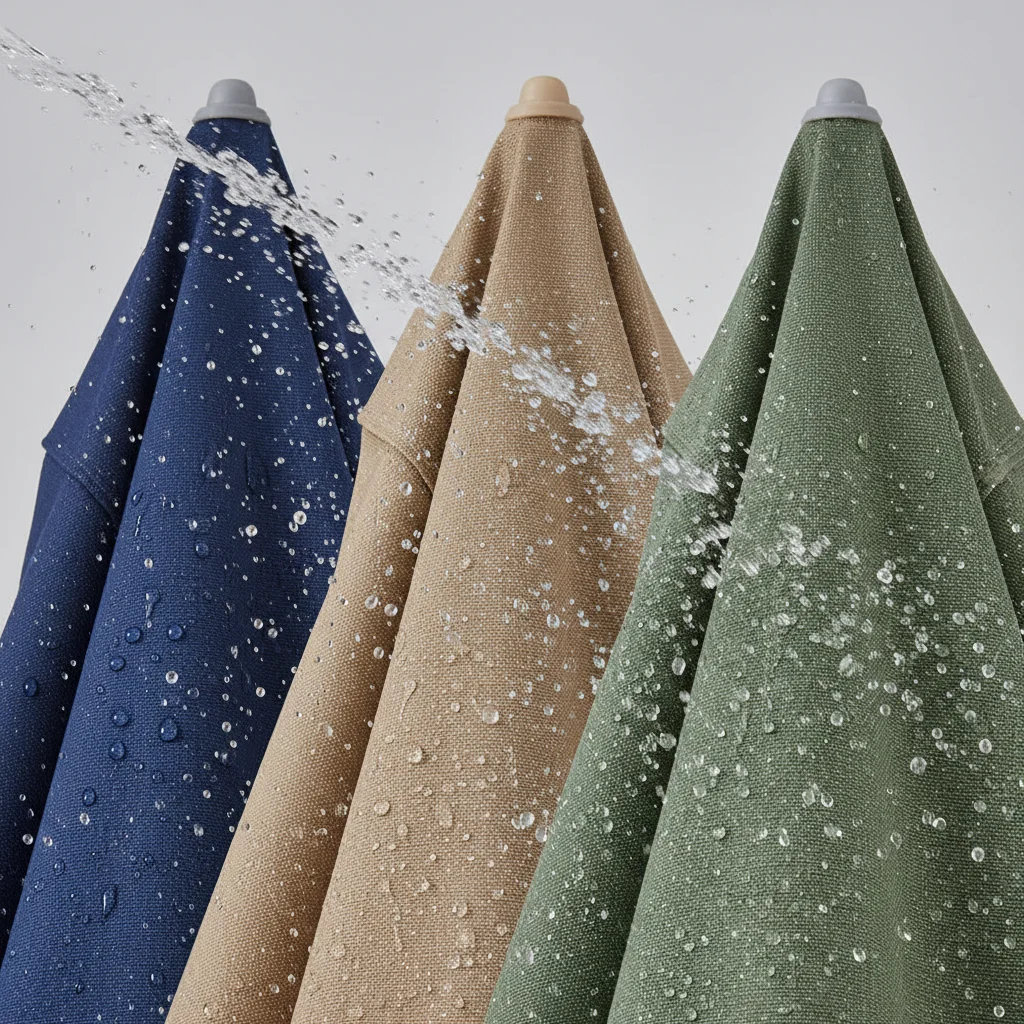
When selecting a patio umbrella, understanding the water resistance of its fabric is crucial for long-lasting performance and protection. The best patio umbrella fabric for water resistance is solution-dyed acrylic, which offers superior repellency and durability compared to other common materials like polyester or olefin.
Understanding Water Resistance vs. Waterproof
It’s important to distinguish between water-resistant and waterproof. A water-resistant fabric will repel light rain and moisture, causing it to bead up and roll off, while a waterproof fabric creates an impenetrable barrier. Most patio umbrella fabrics are designed to be water-resistant, not fully waterproof, to allow for breathability and prevent mildew. Solution-dyed acrylic, for instance, is highly water-resistant due to its tight weave and often a durable water repellent (DWR) coating applied during manufacturing. For see our patio umbrellas recommendations on this site.
Solution-Dyed Acrylic: The Top Performer
Solution-dyed acrylic, often recognized by brand names like Sunbrella, is renowned for its exceptional water resistance. The fibers are dyed before weaving, which means the color penetrates the entire fiber, making it highly resistant to fading and degradation from UV exposure and moisture. Its inherent properties, combined with a DWR finish, ensure that water beads up and runs off, keeping the area beneath dry during light to moderate rain. This material also dries quickly, further preventing mold and mildew growth.
Polyester: A Common and Affordable Option
|
Our Picks for the Best Patio Umbrella in 2026
As an Amazon Associate I earn from qualifying purchases.
|
||
| Num | Product | Action |
|---|---|---|
| 1 | 9ft Patio Umbrella with Push Button Tilt and Crank,Outdoor Market Table Umbrella UV Protection 8 Sturdy Ribs for Backyard,Garden,Pool,Deck |

|
| 2 | JEAREY 9 FT Patio Umbrella Outdoor, Table Umbrellas Market Umbrella w/Push Button Tilt/Crank, 8 Sturdy Ribs(Cerulean) |
|
| 3 | ABCCANOPY 9ft Outdoor Umbrella Replacement Top Suit 8 Ribs (Turquoise) |
|
| 4 | JEAREY 7.5FT Patio Umbrella Outdoor Market Umbrella with 6 Sturdy Ribs, Push Button Tilt/Crank Table Umbrella for Garden, Deck, Backyard and Pool, Royal Blue |
|
| 5 | ABCCANOPY 7.5ft Scalloped Patio Umbrella, Outdoor Table Umbrella with Tilt and Crank, Fiberglass Ribs Deck Umbrella for Patio, Pool, Garden, Picnic (Turquoise) |
|
| 6 | Kingdura 9ft 3-Tier Patio Umbrella, Outdoor Table Umbrella with Easy Crank & Tilt, 8 Reinforced Ribs, UV Protection for Deck, Pool, Market, Backyard (Beige) |
|
| 7 | AreShark 9FT Patio Umbrella with Solar Lights, 32 LED Lighted Pool Umbrella w/Tilt and Crank, Outdoor Market Solar Umbrellas for Garden, Deck, Backyard, Pool and Beach, Light Gray |
|
| 8 | BACKYARD EXPRESSIONS PATIO · HOME · GARDEN 911554 21 Pound Umbrella Base, Bronze |
|
| 9 | 9FT Auto-Tilt Patio Umbrella|Outdoor Market Table Umbrella with 8 Fiberglass Ribs for Pool,Deck&Backyard |
|
| 10 | MASTERCANOPY Patio Umbrella 9 ft Replacement Canopy for 8 Ribs-Burgundy Canopy Only |
|
Polyester is another popular choice for patio umbrella fabrics, often treated with a polyurethane or acrylic coating to enhance its water resistance. While generally more affordable than acrylic, its water repellency can vary significantly depending on the quality of the fabric and the coating applied. Over time, these coatings can wear off, reducing the fabric’s effectiveness. Higher-denier polyester with a robust coating can offer good water resistance for its price point, making it a viable option for those on a budget.
Olefin: Eco-Friendly and Moderately Resistant
Olefin, also known as polypropylene, is a synthetic fiber known for its eco-friendliness and moderate water resistance. It’s naturally resistant to moisture and mildew, making it a good choice for humid environments. While it doesn’t quite match the water repellency of solution-dyed acrylic, it performs better than untreated polyester. Olefin fabrics are also colorfast and resistant to staining, offering a good balance of performance and value.
Factors Affecting Water Resistance
- Fabric Weave: Tighter weaves naturally offer better water resistance by reducing the size of the gaps through which water can penetrate.
- Durable Water Repellent (DWR) Coatings: Many fabrics are treated with a DWR finish that causes water to bead up and roll off. The quality and longevity of this coating are critical.
- Maintenance: Regular cleaning and reapplication of water repellent sprays can help maintain the fabric’s water resistance over time.
- UV Exposure: Prolonged exposure to UV rays can degrade fabric fibers and coatings, reducing their water-resistant properties.
Maintaining Your Umbrella’s Water Resistance
To ensure your patio umbrella continues to repel water effectively, regular maintenance is key. Clean the canopy periodically with mild soap and water to remove dirt and debris that can compromise the DWR coating. After cleaning, consider applying a fabric protector spray designed for outdoor use. This will help restore and enhance the water-repellent properties of the fabric, extending its lifespan and performance.
Get our weekly buyer guide
Practical specs, not advice. Unsubscribe anytime.

This information was super helpful when I was trying to decide on a new umbrella. I went with a solution-dyed acrylic one, and it’s fantastic. The tight weave really makes a difference; even after a heavy downpour, the underside stays completely dry. It’s clear that investing in quality fabric pays off for long-lasting performance.
I finally upgraded my old umbrella to one with solution-dyed acrylic fabric, and what a difference! We get a lot of sudden showers here, and the water just beads right off. It’s so much better than the polyester one I had before, which always seemed to get soaked through. Definitely worth the investment for the durability and peace of mind.
I appreciate the breakdown between water-resistant and waterproof. I always thought they were the same! My new umbrella has an olefin fabric, and it’s been pretty good for light rain, exactly as described. It’s not completely impenetrable, but for everyday use and keeping us dry during a drizzle, it does the job well without breaking the bank.
I bought an umbrella that was advertised as having a DWR coating, but I’m a little disappointed. While it repels light rain okay, anything more than a sprinkle seems to soak through after a while. I was hoping for something a bit more robust for those heavier summer storms. It’s fine for casual use, but I might need to look into a different material next time.