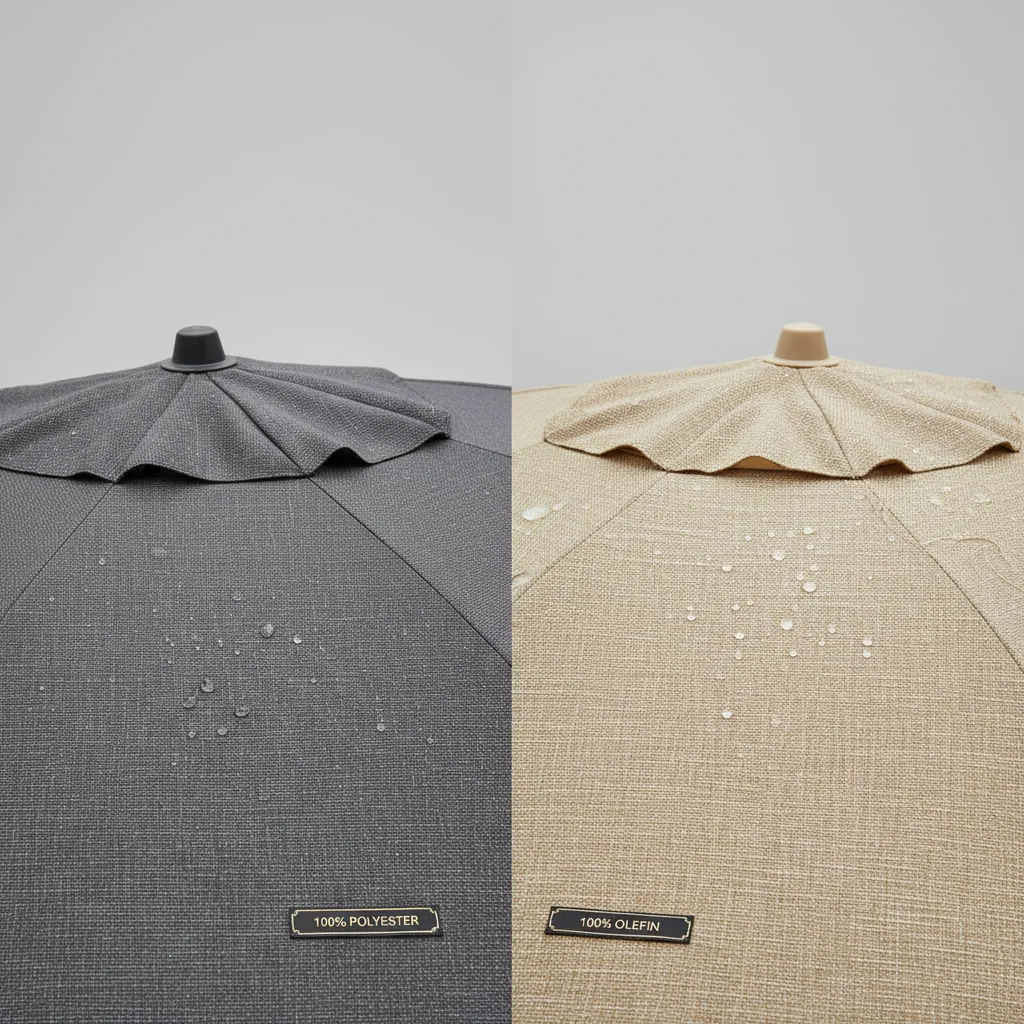
When choosing a patio umbrella, the fabric type is a critical factor for durability and performance. Between polyester and olefin, olefin generally offers superior fade resistance and a softer feel, making it a better long-term investment for most outdoor settings. However, polyester often comes at a lower price point and can still provide adequate protection for less demanding environments.
Understanding Polyester Patio Umbrella Fabric
Polyester is a synthetic fabric widely used for patio umbrellas due to its affordability and decent performance. It’s known for its strength, resistance to stretching and shrinking, and quick-drying properties. Many polyester fabrics are treated with a UV-resistant coating to help prevent fading, though the effectiveness of this coating can vary significantly between manufacturers and price points. While it offers good water resistance, prolonged exposure to intense sunlight can eventually lead to color degradation and a breakdown of the fabric’s integrity.
One of the main advantages of polyester is its accessibility. You’ll find a vast selection of colors and patterns, often at a more budget-friendly price. This makes it a popular choice for those looking to refresh their outdoor space without a significant financial commitment. However, be mindful that cheaper polyester options may fade more quickly and require more frequent replacement.
Exploring Olefin Patio Umbrella Fabric
Olefin, also known as polypropylene, is another synthetic fabric that has gained popularity for outdoor use. It’s manufactured from synthetic fibers that are solution-dyed, meaning the color is added during the fiber production process rather than after the fabric is woven. This method results in exceptional colorfastness, making olefin highly resistant to fading from UV exposure and harsh weather conditions. It’s also inherently resistant to mold, mildew, and stains, which contributes to its low maintenance requirements.
Beyond its durability, olefin fabric often has a softer, more textile-like feel compared to some polyesters, enhancing the comfort and aesthetic appeal of your patio umbrella. It’s also environmentally friendly, as it’s 100% recyclable and its production process uses less energy and water than many other synthetic fabrics. While typically more expensive than basic polyester, its longevity and performance often justify the higher initial cost.
Key Differences: Fade Resistance and Durability
|
Our Picks for the Best Patio Umbrella in 2026
As an Amazon Associate I earn from qualifying purchases.
|
||
| Num | Product | Action |
|---|---|---|
| 1 | MASTERCANOPY Patio Umbrella 9 ft Replacement Canopy for 8 Ribs-Burgundy Canopy Only |

|
| 2 | BACKYARD EXPRESSIONS PATIO · HOME · GARDEN 911554 21 Pound Umbrella Base, Bronze |
|
| 3 | ABCCANOPY 7.5ft Scalloped Patio Umbrella, Outdoor Table Umbrella with Tilt and Crank, Fiberglass Ribs Deck Umbrella for Patio, Pool, Garden, Picnic (Turquoise) |
|
| 4 | ABCCANOPY 9ft Outdoor Umbrella Replacement Top Suit 8 Ribs (Turquoise) |
|
| 5 | Kingdura 9ft 3-Tier Patio Umbrella, Outdoor Table Umbrella with Easy Crank & Tilt, 8 Reinforced Ribs, UV Protection for Deck, Pool, Market, Backyard (Beige) |
|
| 6 | AreShark 9FT Patio Umbrella with Solar Lights, 32 LED Lighted Pool Umbrella w/Tilt and Crank, Outdoor Market Solar Umbrellas for Garden, Deck, Backyard, Pool and Beach, Light Gray |
|
| 7 | 9FT Auto-Tilt Patio Umbrella|Outdoor Market Table Umbrella with 8 Fiberglass Ribs for Pool,Deck&Backyard |
|
| 8 | 9ft Patio Umbrella with Push Button Tilt and Crank,Outdoor Market Table Umbrella UV Protection 8 Sturdy Ribs for Backyard,Garden,Pool,Deck |
|
| 9 | JEAREY 7.5FT Patio Umbrella Outdoor Market Umbrella with 6 Sturdy Ribs, Push Button Tilt/Crank Table Umbrella for Garden, Deck, Backyard and Pool, Royal Blue |
|
| 10 | JEAREY 9 FT Patio Umbrella Outdoor, Table Umbrellas Market Umbrella w/Push Button Tilt/Crank, 8 Sturdy Ribs(Cerulean) |
|
The most significant difference between polyester and olefin lies in their fade resistance and overall durability. Olefin’s solution-dyed process provides superior protection against UV degradation, meaning your umbrella will retain its vibrant color for much longer. Polyester, even with UV treatments, will generally show signs of fading more quickly, especially in direct, intense sunlight. In terms of durability, both are strong, but olefin’s inherent resistance to mold, mildew, and stains gives it an edge in maintaining its appearance and structural integrity over time.
- Olefin offers superior, inherent fade resistance due to solution-dyed fibers.
- Polyester relies on surface coatings for UV protection, which can degrade.
- Olefin is naturally resistant to mold, mildew, and many stains.
- Polyester can be treated for mold and mildew, but may require more cleaning.
- Olefin often has a softer texture and more luxurious feel.
- Polyester is generally more budget-friendly and widely available.
Maintenance and Cost Considerations
When it comes to maintenance, both fabrics are relatively easy to clean. However, olefin’s natural resistance to mold, mildew, and stains often means less frequent and less intensive cleaning is required. A simple wipe-down with mild soap and water is usually sufficient for olefin. Polyester may require more diligent cleaning to prevent mildew growth, especially in humid climates.
From a cost perspective, polyester umbrellas are typically more affordable upfront. This makes them an attractive option for those with tighter budgets or who prefer to replace their umbrellas more frequently. Olefin umbrellas, while a larger initial investment, often prove to be more cost-effective in the long run due to their extended lifespan and reduced need for replacement. Consider your budget and how long you expect your umbrella to last when making your decision.
Which Fabric is Right for Your Patio?
Choosing between polyester and olefin ultimately depends on your priorities. If budget is your primary concern and you don’t mind the possibility of replacing your umbrella every few seasons, a good quality polyester option can be perfectly adequate. However, if you’re looking for maximum longevity, superior fade resistance, and minimal maintenance, olefin is the clear winner. It’s particularly recommended for areas with intense sun exposure or for those who want a premium, long-lasting outdoor shade solution that maintains its aesthetic appeal year after year.
Get our weekly buyer guide
Practical specs, not advice. Unsubscribe anytime.

This was super helpful in making my decision. I needed something for a less demanding environment, mostly just for weekend use, so the quick-drying properties of polyester really appealed to me. It’s been great for light rain and seems pretty durable. I appreciate the breakdown of the pros and cons for both fabric types.
I picked up a polyester umbrella because the price point was just too good to pass up. It’s been okay for the most part, but I’ve noticed some slight fading already after only one season, even with the UV coating. It’s not terrible, but I wish I’d known how much the effectiveness of the coating can vary. Next time, I’ll probably go for something with better fade protection.
I’ve always struggled with my patio umbrellas looking dingy after a year or two. The information here about olefin having a softer feel and being a better long-term investment really resonated with me. I splurged on an olefin umbrella this year and the difference in quality is noticeable. It feels much more luxurious and I’m excited to see how it holds up.
I’m so glad I read this before buying! I was leaning towards a cheaper polyester umbrella, but after learning about olefin’s superior fade resistance, I decided to invest a little more. My new umbrella looks fantastic and I’m confident it will hold up much better in the intense summer sun here in Arizona. Definitely worth the extra cost for the peace of mind.