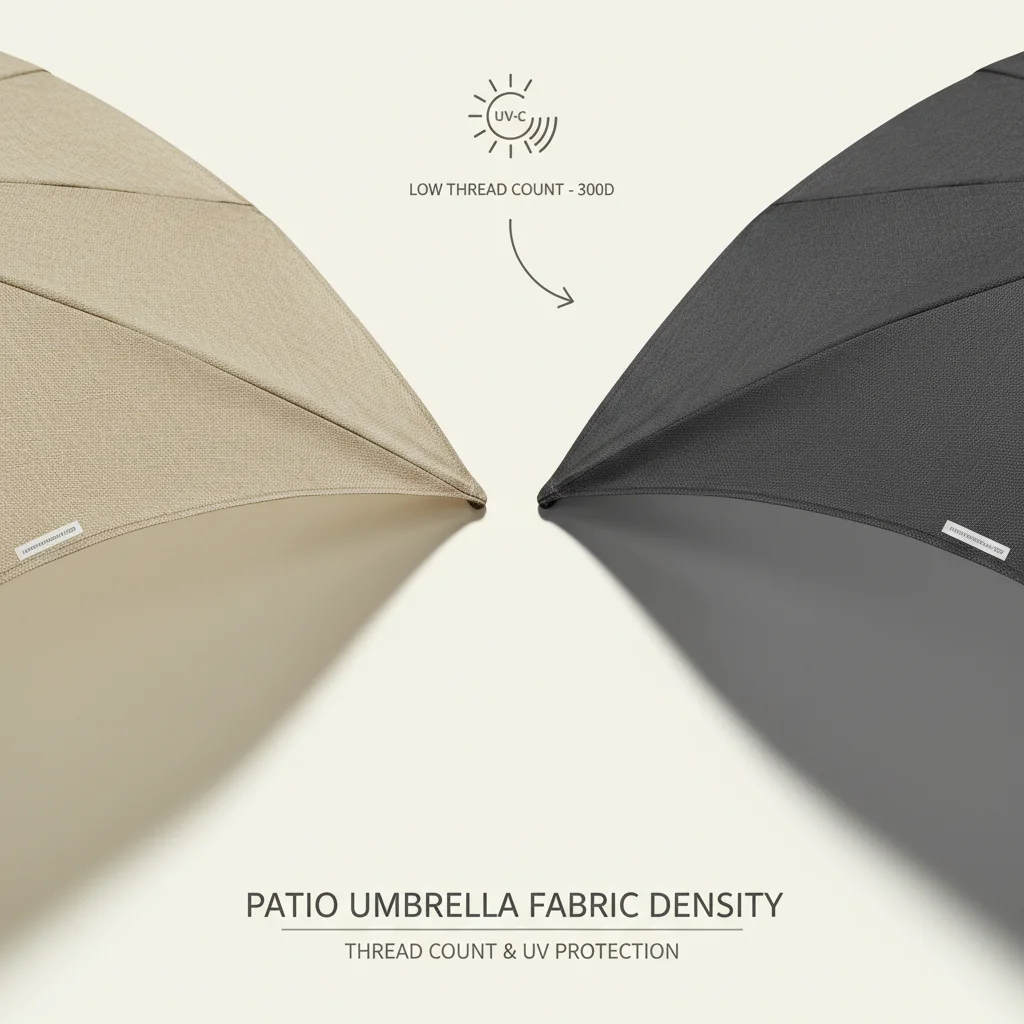
When selecting a patio umbrella, the density of its fabric plays a crucial role in determining its effectiveness, particularly concerning UV protection and durability. While thread count is a common metric for indoor textiles, for outdoor umbrella fabrics like solution-dyed acrylic or polyester, density is more accurately assessed by factors such as weave tightness, fabric weight (often measured in ounces per square yard), and the specific yarn denier. A higher density fabric generally offers superior UV blockage, better resistance to tearing, and a longer lifespan against the elements.
Understanding Fabric Density in Outdoor Umbrellas
Unlike bed sheets where thread count directly indicates density, outdoor fabrics prioritize a tight weave and robust yarn construction. For instance, a tightly woven solution-dyed acrylic fabric, even with a moderate thread count, can provide excellent UV protection due to its inherent fiber properties and the way the yarns are interlocked. This tight construction minimizes the gaps through which UV rays can penetrate, offering a more effective barrier against sun exposure. Fabric weight is another indicator; heavier fabrics often correlate with higher density and greater durability.
The Impact of Weave on UV Protection
The type of weave significantly influences a patio umbrella’s UV protection capabilities. A plain weave, where warp and weft threads cross over and under each other in a simple pattern, can be effective if the threads are tightly packed. However, more complex weaves, such as twill or basket weaves, can offer even greater density and, consequently, enhanced UV resistance and tear strength. These weaves create a denser barrier, reducing the amount of sunlight that passes through the canopy. Always look for fabrics specifically rated for UV protection, often indicated by a UPF (Ultraviolet Protection Factor) rating.
Why Fabric Weight Matters for Durability
|
Our Picks for the Best Patio Umbrella in 2026
As an Amazon Associate I earn from qualifying purchases.
|
||
| Num | Product | Action |
|---|---|---|
| 1 | JEAREY 7.5FT Patio Umbrella Outdoor Market Umbrella with 6 Sturdy Ribs, Push Button Tilt/Crank Table Umbrella for Garden, Deck, Backyard and Pool, Royal Blue |

|
| 2 | AreShark 9FT Patio Umbrella with Solar Lights, 32 LED Lighted Pool Umbrella w/Tilt and Crank, Outdoor Market Solar Umbrellas for Garden, Deck, Backyard, Pool and Beach, Light Gray |
|
| 3 | Kingdura 9ft 3-Tier Patio Umbrella, Outdoor Table Umbrella with Easy Crank & Tilt, 8 Reinforced Ribs, UV Protection for Deck, Pool, Market, Backyard (Beige) |
|
| 4 | 9ft Patio Umbrella with Push Button Tilt and Crank,Outdoor Market Table Umbrella UV Protection 8 Sturdy Ribs for Backyard,Garden,Pool,Deck |
|
| 5 | ABCCANOPY 9ft Outdoor Umbrella Replacement Top Suit 8 Ribs (Turquoise) |
|
| 6 | BACKYARD EXPRESSIONS PATIO · HOME · GARDEN 911554 21 Pound Umbrella Base, Bronze |
|
| 7 | ABCCANOPY 7.5ft Scalloped Patio Umbrella, Outdoor Table Umbrella with Tilt and Crank, Fiberglass Ribs Deck Umbrella for Patio, Pool, Garden, Picnic (Turquoise) |
|
| 8 | JEAREY 9 FT Patio Umbrella Outdoor, Table Umbrellas Market Umbrella w/Push Button Tilt/Crank, 8 Sturdy Ribs(Cerulean) |
|
| 9 | MASTERCANOPY Patio Umbrella 9 ft Replacement Canopy for 8 Ribs-Burgundy Canopy Only |
|
| 10 | 9FT Auto-Tilt Patio Umbrella|Outdoor Market Table Umbrella with 8 Fiberglass Ribs for Pool,Deck&Backyard |
|
Fabric weight, typically expressed in ounces per square yard or grams per square meter, is a direct measure of the material’s bulk and density. Heavier fabrics generally contain more material per unit area, making them more robust and less prone to tearing or stretching. This increased density also contributes to better wind resistance and a longer service life, as the fabric can withstand more stress from environmental factors. For a durable patio umbrella, aim for fabrics with a weight of at least 8-9 ounces per square yard, especially for high-use or windy environments.
Choosing the Right Density for Your Needs
When evaluating patio umbrella fabric density, consider your specific needs. If maximum UV protection is your priority, opt for fabrics with a high UPF rating and a visibly tight weave. For areas with frequent strong winds, a heavier, denser fabric will offer better resistance to tearing and flapping. While thread count isn’t the primary metric, understanding the interplay of weave, fabric weight, and material type (like solution-dyed acrylic or high-grade polyester) will guide you to a more informed decision. Always check product specifications for details on UV ratings and fabric composition.
- Look for UPF ratings of 50+ for superior UV protection.
- Prioritize solution-dyed acrylic for fade resistance and durability.
- Consider fabric weight; heavier fabrics (8+ oz/sq yd) offer more resilience.
- Examine the weave; tighter weaves block more sun and resist tears.
- Read reviews focusing on long-term performance and sun protection.
Maintenance and Longevity of Dense Fabrics
Even the densest and most durable patio umbrella fabrics require proper care to maintain their integrity and extend their lifespan. Regular cleaning to remove dirt, pollen, and mildew prevents degradation of the fabric fibers. Storing the umbrella in a protective cover during off-seasons or extreme weather also significantly contributes to its longevity. While dense fabrics are inherently more resistant to wear and tear, consistent maintenance ensures they continue to provide optimal shade and protection for many years.
Get our weekly buyer guide
Practical specs, not advice. Unsubscribe anytime.
