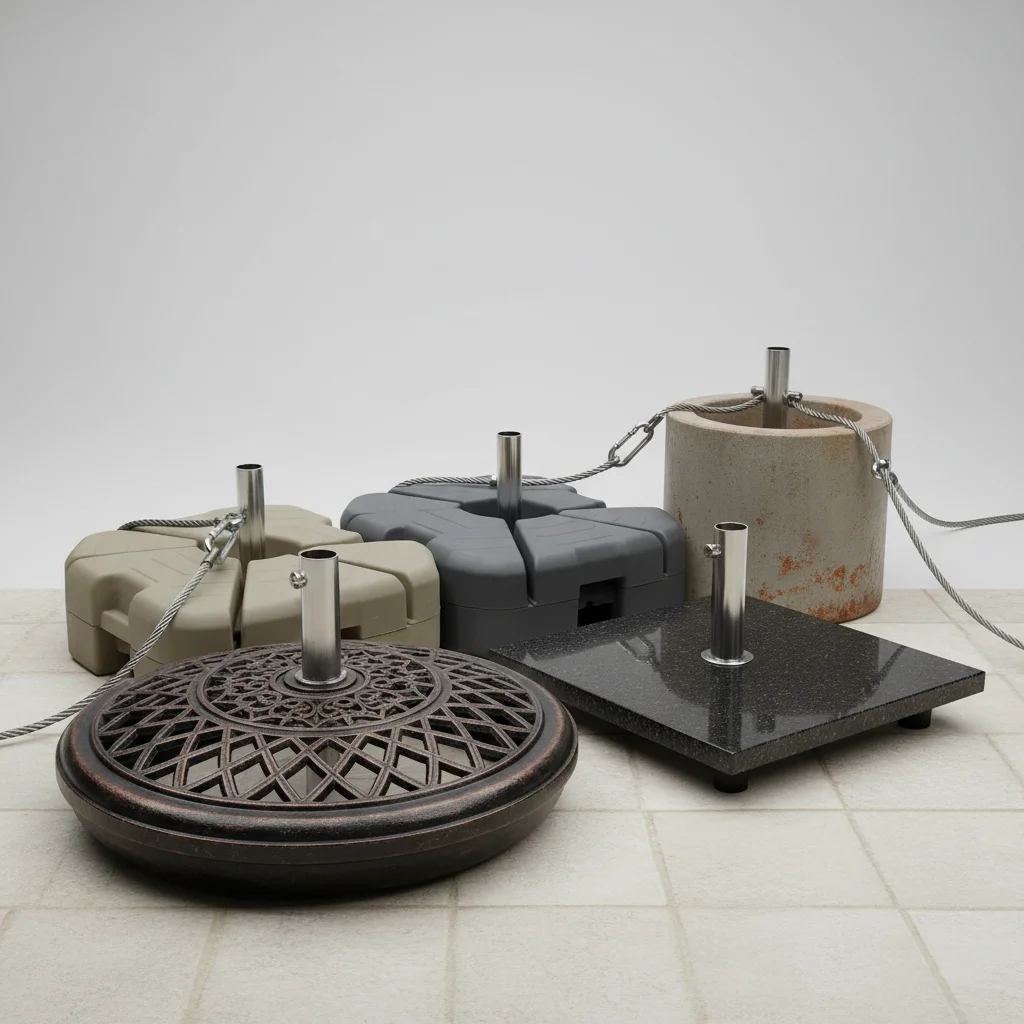
To effectively prevent your patio umbrella from tipping in high winds, you need a base that provides at least 50 pounds of weight for a standard 7-foot umbrella, increasing to 70-100 pounds for larger 9-11 foot models, and even more for cantilever or offset umbrellas. The stability of your patio umbrella is directly proportional to the weight and design of its base, especially when facing unexpected gusts.
Understanding Wind Forces on Patio Umbrellas
Patio umbrellas act like sails, catching wind and creating significant uplift and lateral forces. A strong gust can easily overturn an inadequately weighted umbrella, causing damage to the umbrella itself, nearby furniture, or even posing a safety risk. The larger the canopy, the greater the surface area exposed to the wind, and thus the more substantial the base required to counteract these forces. It’s not just about the weight; the footprint of the base also plays a crucial role in distributing the load and preventing leverage.
Choosing the Right Base Weight for Your Umbrella
Selecting the correct base weight is paramount. For smaller market umbrellas (6-7 feet), a 40-50 pound base is often sufficient for moderate winds. However, for the more common 9-foot market umbrellas, a 70-pound base is a safer bet. Large 10-11 foot market umbrellas demand 80-100 pounds. Cantilever or offset umbrellas, due to their design, require significantly more weight, often 120-200 pounds, distributed across multiple segments or filled with sand/water. Always check the manufacturer’s recommendations for your specific umbrella model.
- For 6-7 ft umbrellas: Minimum 40-50 lbs
- For 8-9 ft umbrellas: Minimum 60-70 lbs
- For 10-11 ft umbrellas: Minimum 80-100 lbs
- For cantilever/offset umbrellas: Minimum 120-200 lbs
Types of Patio Umbrella Bases for Wind Resistance
|
Our Picks for the Best Patio Umbrella in 2026
As an Amazon Associate I earn from qualifying purchases.
|
||
| Num | Product | Action |
|---|---|---|
| 1 | 9ft Patio Umbrella with Push Button Tilt and Crank,Outdoor Market Table Umbrella UV Protection 8 Sturdy Ribs for Backyard,Garden,Pool,Deck |

|
| 2 | MASTERCANOPY Patio Umbrella 9 ft Replacement Canopy for 8 Ribs-Burgundy Canopy Only |
|
| 3 | AreShark 9FT Patio Umbrella with Solar Lights, 32 LED Lighted Pool Umbrella w/Tilt and Crank, Outdoor Market Solar Umbrellas for Garden, Deck, Backyard, Pool and Beach, Light Gray |
|
| 4 | ABCCANOPY 7.5ft Scalloped Patio Umbrella, Outdoor Table Umbrella with Tilt and Crank, Fiberglass Ribs Deck Umbrella for Patio, Pool, Garden, Picnic (Turquoise) |
|
| 5 | Kingdura 9ft 3-Tier Patio Umbrella, Outdoor Table Umbrella with Easy Crank & Tilt, 8 Reinforced Ribs, UV Protection for Deck, Pool, Market, Backyard (Beige) |
|
| 6 | BACKYARD EXPRESSIONS PATIO · HOME · GARDEN 911554 21 Pound Umbrella Base, Bronze |
|
| 7 | 9FT Auto-Tilt Patio Umbrella|Outdoor Market Table Umbrella with 8 Fiberglass Ribs for Pool,Deck&Backyard |
|
| 8 | JEAREY 7.5FT Patio Umbrella Outdoor Market Umbrella with 6 Sturdy Ribs, Push Button Tilt/Crank Table Umbrella for Garden, Deck, Backyard and Pool, Royal Blue |
|
| 9 | ABCCANOPY 9ft Outdoor Umbrella Replacement Top Suit 8 Ribs (Turquoise) |
|
| 10 | JEAREY 9 FT Patio Umbrella Outdoor, Table Umbrellas Market Umbrella w/Push Button Tilt/Crank, 8 Sturdy Ribs(Cerulean) |
|
There are several types of patio umbrella bases, each offering different levels of wind resistance. Concrete and cast iron bases are heavy and durable, providing excellent stability. Fillable bases, made from plastic or resin, can be filled with sand or water to achieve the desired weight, offering flexibility and easier storage. Cross-bar bases, often used with cantilever umbrellas, require additional weight plates to secure them. In-ground bases or those bolted to a deck provide the most secure option, virtually eliminating the risk of tipping, but they are permanent installations.
Additional Strategies to Enhance Stability
Beyond the base, several other strategies can enhance your umbrella’s wind resistance. Always close your umbrella when not in use or when strong winds are anticipated. Using an umbrella cover can also help reduce wind exposure when closed. Some umbrellas come with wind vents in the canopy, which allow air to pass through, reducing the “sail effect.” For extreme conditions, consider a tie-down kit that secures the umbrella to a railing or a heavy anchor point. Regularly inspect your umbrella’s pole and base for any signs of wear or damage that could compromise stability.
When to Consider a Permanent Solution
If you live in a particularly windy area or have a very large, expensive umbrella, a permanent base solution might be the best investment. In-ground sleeves, which are cemented into the ground, offer unparalleled stability. Deck-mounted bases, bolted directly to your deck or patio, also provide a robust solution. While these options require more initial effort and commitment, they offer peace of mind during severe weather and extend the lifespan of your umbrella by preventing repeated damage from tipping. Consult with a professional if you’re unsure about the best permanent solution for your specific outdoor space.
By understanding the forces at play and choosing the appropriate base weight and type, you can significantly reduce the risk of your patio umbrella tipping over in high winds. Always prioritize safety and the longevity of your outdoor shade solution.
Get our weekly buyer guide
Practical specs, not advice. Unsubscribe anytime.

I used to have such a problem with my 9-foot umbrella tipping over with even a slight breeze. After reading about the importance of base weight, I invested in a 70-pound base, and it’s made all the difference. Even during some pretty strong gusts last week, my umbrella stayed perfectly put. It’s such a relief not to worry about it anymore.
I got a new 50-pound base for my standard 7-foot umbrella, and while it’s better than my old one, it still feels a little wobbly in really high winds. I was hoping for complete stability, but it seems like I might need something even heavier or a different design. It’s good for most days, but not perfect for those really windy afternoons.
I never really thought about how much a patio umbrella acts like a sail until I read this. It totally makes sense why my old lightweight base was useless. Upgraded to a much heavier, wider footprint base for my 11-foot umbrella, and it’s been fantastic. No more chasing my umbrella across the yard!
This info on cantilever umbrella bases was super helpful. I have a large offset umbrella and was always nervous about it. I ended up getting one of those fillable bases that you can add water or sand to, and it’s been great. It’s a bit of a hassle to fill, but once it’s done, it’s rock solid. Definitely worth the effort for the stability.