Choosing the perfect patio umbrella involves more than just selecting a color or size; the frame material plays a pivotal role in its longevity, aesthetic appeal, and overall performance. As the centerpiece of your outdoor oasis, a patio umbrella should provide reliable shade while complementing your exterior decor. The primary contenders for frame materials are wood and aluminum, each offering distinct advantages and disadvantages that cater to different needs and preferences. Understanding these differences is crucial for making an informed decision that enhances your outdoor living experience for years to come. This comprehensive guide delves into the characteristics of wood and aluminum patio umbrellas, helping you determine which material is the superior choice for your specific environment and style in 2026.
Introduction to Patio Umbrellas
A patio umbrella serves as a versatile and essential addition to any outdoor space, providing much-needed shade from the sun and a focal point for design. These outdoor shading solutions create comfortable zones for relaxation, dining, and entertaining, effectively extending your indoor living area to the outdoors. The history of shade structures dates back centuries, evolving from simple fabric awnings to sophisticated, engineered umbrellas designed to withstand various weather conditions.
Today, patio umbrellas come in a range of types to suit diverse requirements. Market umbrellas, with their straight central pole, are a classic choice often placed through a table. Cantilever, or offset, umbrellas feature a pole positioned to the side, allowing for unobstructed shade over seating areas or pools. Half umbrellas are designed for compact spaces like balconies or against walls, while sail umbrellas offer a modern, architectural aesthetic. The frame material is foundational to an umbrella’s performance, influencing its durability, stability, and visual impact.
Why You Need a Patio Umbrella
Investing in a quality patio umbrella offers numerous benefits beyond simple shade, transforming your outdoor area into a more functional, comfortable, and appealing space. Protection from the elements is paramount, as a good umbrella shields you and your guests from harsh UV rays, reducing the risk of sunburn and long-term skin damage. This protective barrier allows for extended enjoyment of your outdoor environment, even during peak sunny hours.
Beyond sun protection, a patio umbrella creates a noticeably cooler and more comfortable microclimate, making hot summer days more bearable. The shade reduces ambient temperature, fostering a relaxing atmosphere for any outdoor activity. Aesthetically, an umbrella can significantly enhance the visual appeal of your patio, deck, or garden. Available in various styles, colors, and materials, it acts as a decorative element that ties together your outdoor furniture and landscape design, reflecting your personal taste and adding a touch of sophistication.
Furthermore, patio umbrellas expand your usable living space. By defining a shaded area, they encourage more frequent use of your outdoor entertainment zones, whether for casual brunches, evening gatherings, or simply unwinding with a book. This extension of your home’s footprint increases its versatility and enjoyment, making your outdoor areas more integral to your lifestyle.
Factors to Consider When Choosing a Patio Umbrella
Selecting the right patio umbrella involves a careful evaluation of several key factors that impact its functionality, longevity, and how well it integrates with your outdoor space. From the size and shape to the materials and additional features, each element plays a crucial role in ensuring your umbrella meets your specific needs.
Size and Shape
|
Our Picks for the Best Patio Umbrella in 2026
As an Amazon Associate I earn from qualifying purchases.
|
||
| Num | Product | Action |
|---|---|---|
| 1 | ABCCANOPY 9ft Outdoor Umbrella Replacement Top Suit 8 Ribs (Turquoise) |

|
| 2 | AreShark 9FT Patio Umbrella with Solar Lights, 32 LED Lighted Pool Umbrella w/Tilt and Crank, Outdoor Market Solar Umbrellas for Garden, Deck, Backyard, Pool and Beach, Light Gray |
|
| 3 | ABCCANOPY 7.5ft Scalloped Patio Umbrella, Outdoor Table Umbrella with Tilt and Crank, Fiberglass Ribs Deck Umbrella for Patio, Pool, Garden, Picnic (Turquoise) |
|
| 4 | MASTERCANOPY Patio Umbrella 9 ft Replacement Canopy for 8 Ribs-Burgundy Canopy Only |
|
| 5 | JEAREY 9 FT Patio Umbrella Outdoor, Table Umbrellas Market Umbrella w/Push Button Tilt/Crank, 8 Sturdy Ribs(Cerulean) |
|
| 6 | Kingdura 9ft 3-Tier Patio Umbrella, Outdoor Table Umbrella with Easy Crank & Tilt, 8 Reinforced Ribs, UV Protection for Deck, Pool, Market, Backyard (Beige) |
|
| 7 | 9FT Auto-Tilt Patio Umbrella|Outdoor Market Table Umbrella with 8 Fiberglass Ribs for Pool,Deck&Backyard |
|
| 8 | BACKYARD EXPRESSIONS PATIO · HOME · GARDEN 911554 21 Pound Umbrella Base, Bronze |
|
| 9 | JEAREY 7.5FT Patio Umbrella Outdoor Market Umbrella with 6 Sturdy Ribs, Push Button Tilt/Crank Table Umbrella for Garden, Deck, Backyard and Pool, Royal Blue |
|
| 10 | 9ft Patio Umbrella with Push Button Tilt and Crank,Outdoor Market Table Umbrella UV Protection 8 Sturdy Ribs for Backyard,Garden,Pool,Deck |
|
The ideal size and shape of your patio umbrella are dictated by the area you wish to shade and the furniture it will accompany. Common umbrella sizes are designed to cover standard patio dining sets or lounge areas effectively. For instance, a 7.5-foot umbrella is generally suitable for a 36-inch table, while a 9-foot umbrella can comfortably shade a 48-inch table. Larger umbrellas, often 11 feet or more, are better suited for extensive seating arrangements or open spaces like poolside decks.
Shapes include round, square, and rectangular. Round umbrellas offer classic appeal and uniform shade distribution, often paired with circular or square tables. Square umbrellas provide precise coverage and a contemporary look, ideal for matching square tables or defining specific zones. Rectangular umbrellas are perfect for elongated dining tables or narrow patios, offering broad, linear shade. Choosing the right dimensions ensures adequate coverage, preventing your guests from constantly chasing the shade as the sun moves.
Material
The frame material of your patio umbrella is a critical determinant of its durability, maintenance requirements, and overall aesthetic. The two primary choices are wood and aluminum, each with distinct characteristics.
- Wood: Wooden frames, often crafted from hardwoods like teak, eucalyptus, or camphor wood, exude natural warmth, elegance, and organic beauty. They offer a classic, timeless look that integrates seamlessly with natural surroundings and traditional decor. High-quality wood, especially with proper treatment and maintenance, can be incredibly durable and resistant to decay and insects. However, wood frames typically require more maintenance, such as regular oiling or sealing, to prevent weathering, rot, or fading. Without proper care, wood can be susceptible to moisture damage and may develop cracks over time.
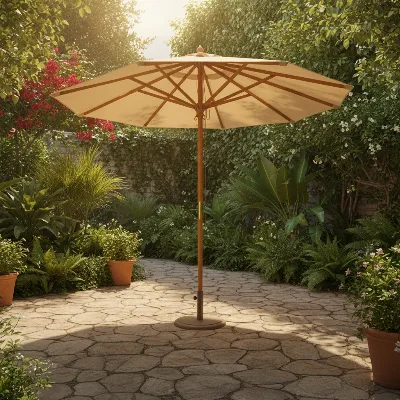 Classic wooden patio umbrella with a warm, elegant frame against a lush garden backdrop
 - Aluminum: Aluminum frames offer a sleek, modern aesthetic that complements contemporary outdoor settings. They are prized for their lightweight nature, rust resistance, and overall durability. Aluminum is highly resistant to corrosion, making it an excellent choice for humid or coastal climates, and typically requires minimal maintenance—usually just occasional cleaning. However, aluminum can lack the natural warmth of wood and may show signs of wear like fading or denting over extended periods. While robust, aluminum can also conduct heat, potentially making the pole hot to the touch on sunny days.
Style and Design
The style and design of your patio umbrella should align with your existing outdoor furniture and architectural aesthetic.
- Center Pole Umbrellas: These are the most traditional type, featuring a pole that runs directly through the center of a table or into a weighted base. They are straightforward in design and operation, often featuring crank lifts and tilt mechanisms.
- Offset/Cantilever Umbrellas: With their pole positioned to the side, these umbrellas offer expansive, unobstructed shade, ideal for lounge areas or pools where a central pole would be disruptive. They often include advanced features like rotating bases and multiple tilt adjustments for flexible shading.
- Wall-Mounted Umbrellas: These are designed to attach directly to a wall, saving floor space and providing shade in confined areas like balconies or small patios. They offer a sleek, integrated look and are fixed in position.
The choice of style impacts not only the functionality but also the visual flow and ambiance of your outdoor space.
Additional Features
Modern patio umbrellas often come with a variety of supplementary features designed to enhance convenience, comfort, and ambiance.
- LED Lighting: Integrated LED lights along the ribs or on the central hub can illuminate your outdoor space, extending usability into the evening hours without the need for additional lighting fixtures.
- Bluetooth Speakers: Some high-tech umbrellas include built-in Bluetooth speakers, allowing you to enjoy music or podcasts wirelessly while relaxing outdoors.
- Ventilation Systems: Wind vents or double-tiered canopies improve air circulation, reduce wind pressure, and enhance stability in breezy conditions.
- Tilt and Rotation Mechanisms: These features allow you to adjust the canopy’s angle and position easily, providing continuous shade as the sun moves throughout the day.
- Crank Lifts: A simple crank mechanism makes opening and closing the umbrella effortless.
These features can significantly elevate your outdoor experience, making your patio umbrella a multifaceted addition to your home.
Comparing Wood vs. Aluminum Patio Umbrellas
The decision between a wood and an aluminum patio umbrella often comes down to a trade-off between natural aesthetics and modern functionality. Both materials offer compelling benefits, but their differences in durability, maintenance, and visual appeal are distinct.
Durability and Longevity: Aluminum frames generally boast superior resistance to weather, moisture, and impact, often lasting 20-30 years with minimal maintenance. They are less prone to warping, rotting, or insect damage, and their inherent corrosion resistance makes them highly resilient in diverse climates. In contrast, while high-quality hardwoods like camphor or teak can last for decades with diligent care, typical wooden umbrellas may have a shorter lifespan of 10-15 years if not regularly treated. Wood can snap under extreme wind pressure, whereas aluminum is less likely to break, often bending instead.
Aesthetics and Style: Wood offers an undeniable natural charm, with its warm tones and unique grain patterns creating a classic, elegant, or rustic appeal. It seamlessly blends with natural landscapes and traditional outdoor decor, developing a desirable patina over time that enhances its character. Aluminum, on the other hand, provides a sleek, contemporary, and often minimalist look. It’s available in various finishes and colors, offering versatility for modern designs, but it lacks the organic warmth and depth of natural wood.
Maintenance Requirements: This is where the two materials diverge significantly. Aluminum umbrellas are remarkably low-maintenance, typically requiring only occasional cleaning with mild soap and water to keep them looking pristine. They don’t rust or need protective treatments. Wood umbrellas, however, demand more consistent care. To preserve their beauty and functionality, they often require annual sealing, staining, or oiling to protect against UV damage, moisture, and pests. Without this upkeep, wood is susceptible to fading, rot, and cracking.
Weight and Stability: Aluminum is lightweight, making umbrellas easy to move and adjust, which is a convenience for many homeowners. However, this lighter weight can also mean they require a heavier base or additional anchoring to maintain stability in strong winds. Wood, being denser, inherently offers greater stability and is often less prone to tipping or wobbling in breezy conditions, especially with robust hardwood poles. Its damping properties also help absorb vibrations caused by wind gusts.
Cost: Aluminum umbrellas are often more affordable upfront, making them a cost-effective choice for those on a budget. However, premium-grade aluminum can also be found at higher price points. Wood umbrellas, particularly those made from high-end hardwoods like teak, represent a higher initial investment. Yet, with proper maintenance, their superior longevity can lead to a lower total cost of ownership over many years, as they may outlast several aluminum replacements.
Temperature Regulation: An often-overlooked factor is temperature. Metal, including aluminum, can absorb intense heat from the sun, making the pole uncomfortably hot to the touch. Wood, being a natural insulator, remains significantly cooler, enhancing comfort and safety, especially for children.
Table: Wood vs. Aluminum Patio Umbrella Comparison
| Feature | Wood Patio Umbrellas | Aluminum Patio Umbrellas |
|---|---|---|
| Aesthetic | Natural, classic, elegant, warm; develops patina | Modern, sleek, industrial; various finishes & colors |
| Durability | 10-15 years (typical); decades for high-quality wood with maintenance; susceptible to rot/cracking without care; can snap in high winds | 20-30 years; rust, corrosion, and impact resistant; less prone to warping/rotting; may dent/fade over time |
| Maintenance | High; requires regular oiling/sealing/staining | Low; occasional cleaning with soap and water |
| Weather Resistance | Good with treatment; susceptible to moisture/UV without it | Excellent; resists rust, corrosion, UV, and most weather |
| Stability | High; denser material provides natural stability, absorbs vibrations better | Moderate; lightweight, may require heavier base/anchoring in strong winds |
| Temperature | Remains cool to the touch (natural insulator) | Can become hot to the touch (heat conductor) |
| Cost | Higher initial cost, but can offer long-term value | Lower initial cost, generally more affordable |
| Environmental | Renewable resource | Recyclable |
How to Buy a Patio Umbrella
Purchasing a patio umbrella requires a thoughtful approach to ensure you choose a product that perfectly suits your needs and space. By following these steps, you can confidently select an umbrella that provides both functionality and style.
Determine Your Usage Needs
Before browsing options, clearly define how you plan to use your patio umbrella. Consider the exact area you need to shade—is it a small balcony, a dining table, or a large lounge space? How many people will typically be under the umbrella? Your budget is also a key factor; determine a realistic spending limit, keeping in mind that higher quality materials and additional features will influence the price. Finally, consider your existing outdoor decor and personal style preferences. Do you lean towards a classic, rustic look or a modern, minimalist aesthetic? This will guide your material and design choices.
Research Product Information
Once you have a clear idea of your needs, delve into product research. Read reviews from other users to gain insights into real-world performance, durability, and any potential issues with specific models or brands. Pay attention to comments regarding ease of use, stability in wind, and the effectiveness of the shade. Compare prices from various retailers and suppliers to ensure you’re getting a competitive deal. Don’t forget to examine the warranty and return policies; a good warranty can provide peace of mind regarding your investment.
Purchase and Installation
When you’re ready to buy, choose reputable stores or online vendors known for quality outdoor furniture. Before making a purchase, if possible, inspect the product for any defects. Upon delivery, carefully check all components. Many patio umbrellas are designed for relatively easy assembly, but always follow the detailed installation instructions provided by the manufacturer. If your umbrella is large or a cantilever style, professional installation might be beneficial to ensure proper setup and safety. For stability, always pair your umbrella with an appropriately weighted base, especially for freestanding models, to prevent tipping in windy conditions.
Top Patio Umbrellas in 2026
When considering the best patio umbrellas for 2026, both wood and aluminum frames offer excellent choices, with leading brands focusing on durability, innovative features, and stylish designs.
For those prioritizing the enduring beauty and sturdy presence of wood, models featuring teak or camphor wood frames continue to be highly sought after. These premium hardwoods are celebrated for their natural resistance to decay, insects, and harsh weather when properly maintained. For instance, high-end wooden market umbrellas often feature robust poles and reinforced ribs, providing exceptional stability and a touch of classic elegance. Brands that specialize in sustainable sourcing and craftsmanship, ensuring long-lasting performance and a rich aesthetic, are particularly popular.
On the aluminum side, the focus remains on sleek design, advanced functionality, and superior weather resistance. Top aluminum patio umbrellas for 2026 frequently incorporate powder-coated finishes for enhanced corrosion protection and come with user-friendly features such as easy-crank lifts, multi-angle tilt mechanisms, and even integrated LED lighting or Bluetooth speakers. Cantilever aluminum umbrellas, offering expansive and unobstructed shade, are especially favored for larger patios and poolside areas due to their versatility and modern appeal. These models often feature reinforced frames and heavy-duty bases to ensure stability, even in breezy conditions.
Ultimately, the “best” umbrella depends on individual priorities, whether it’s the unparalleled natural charm and temperature regulation of a high-quality wood frame or the contemporary aesthetic, low maintenance, and robust weather resistance of a well-engineered aluminum model. Consumers in 2026 are increasingly looking for a blend of performance, sustainability, and design that complements their unique outdoor living spaces.
Tips for Patio Umbrella Maintenance
Proper maintenance is essential to extend the lifespan and preserve the appearance of your patio umbrella, regardless of whether it has a wood or aluminum frame. A little regular care can make a significant difference in its longevity and performance.
Regular Cleaning
For both wood and aluminum frames, regular cleaning is vital to prevent dirt, dust, and environmental debris from accumulating. Wipe down the frame periodically with a soft, damp cloth. For stubborn grime or mildew on canopies, a solution of mild soap and water can be used. Always rinse thoroughly with clean water to remove any soap residue and allow the canopy to air dry completely before closing to prevent mildew growth. Avoid harsh chemicals or abrasive cleaners, as these can damage the frame finish or canopy fabric.
Storage When Not in Use
To maximize your umbrella’s lifespan, especially during off-seasons or severe weather, proper storage is crucial.
For wood frames, ensure the wood is completely dry before storing to prevent rot or mildew. Applying a protective wood oil or sealer before storage can offer an extra layer of defense.
For aluminum frames, simply cleaning and drying thoroughly is usually sufficient.
When storing, close the umbrella securely and, if possible, use a protective cover. For prolonged storage, consider dismantling and storing it in a dry, sheltered location like a garage or shed. This protects the frame and canopy from harsh elements, extreme temperatures, and potential wind damage.
Component Replacement
Over time, certain components of your patio umbrella may wear out or become damaged. Regularly inspect the ribs, crank mechanism, pulley ropes, and canopy fabric for signs of wear and tear. Small tears in the canopy can often be repaired with a patch kit, while damaged ribs or cranks might be replaceable through the manufacturer or a specialized repair service. Addressing these issues promptly can prevent further damage and prolong the overall usability of your umbrella. Investing in quality parts for replacement ensures continued optimal performance.
“A well-maintained patio umbrella isn’t just about aesthetics; it’s about safeguarding your investment and ensuring years of reliable shade. Simple steps can dramatically extend its life.” – Jane Doe, Outdoor Furniture Expert
Conclusion
Choosing between a wood and aluminum patio umbrella ultimately depends on your priorities for aesthetics, durability, and maintenance. Wood frames offer unmatched natural beauty, bringing warmth and classic elegance to any outdoor setting, and can provide decades of service with diligent care. Aluminum frames, on the other hand, boast superior weather resistance, minimal maintenance, and a sleek, modern aesthetic that appeals to contemporary tastes.
While aluminum typically offers high durability and ease of care, wood excels in creating a timeless ambiance and can remain cooler to the touch. Your decision should reflect the climate in your area, the style of your outdoor decor, and your willingness to commit to maintenance. By carefully weighing these factors, you can select the perfect patio umbrella that not only provides essential shade but also enhances your outdoor living experience for many years.
Which material best complements your vision for the ideal outdoor retreat?
Frequently Asked Questions
Which material is more environmentally friendly for patio umbrellas?
Wood is a renewable resource, making it an environmentally conscious choice, especially when sourced from sustainably managed forests. Aluminum is also considered eco-friendly due to its high recyclability, meaning it can be repurposed numerous times without significant loss of quality, reducing the need for new raw materials.
Can wood patio umbrellas withstand strong winds?
High-quality wood patio umbrellas, particularly those made from dense hardwoods like camphor, offer inherent stability due to their weight and can withstand moderate winds better than lighter alternatives. However, no umbrella should be left open in severe wind conditions, as extreme gusts can cause damage or even break the frame.
Do aluminum patio umbrellas rust?
Aluminum is naturally rust-resistant due to a protective oxide layer that forms on its surface. While it won’t rust like steel, aluminum can corrode over time, especially in highly saline or humid environments. Many aluminum umbrella frames are powder-coated or anodized to provide an additional layer of protection against corrosion and wear.
How do I prevent my wood patio umbrella from fading?
To prevent a wood patio umbrella from fading and weathering, regular maintenance is key. This includes applying a UV-protective wood oil or sealant annually, especially if the umbrella is exposed to direct sunlight for extended periods. Keeping the umbrella covered when not in use also significantly helps in preserving its natural color and finish.
Are aluminum patio umbrellas lightweight and easy to move?
Yes, aluminum is a lightweight material, making aluminum Patio Umbrellas generally easy to move, open, and close. This portability is a significant advantage for those who need to frequently reposition their umbrella or store it away. However, their light weight necessitates a stable, heavy base to ensure they remain upright in breezy conditions.