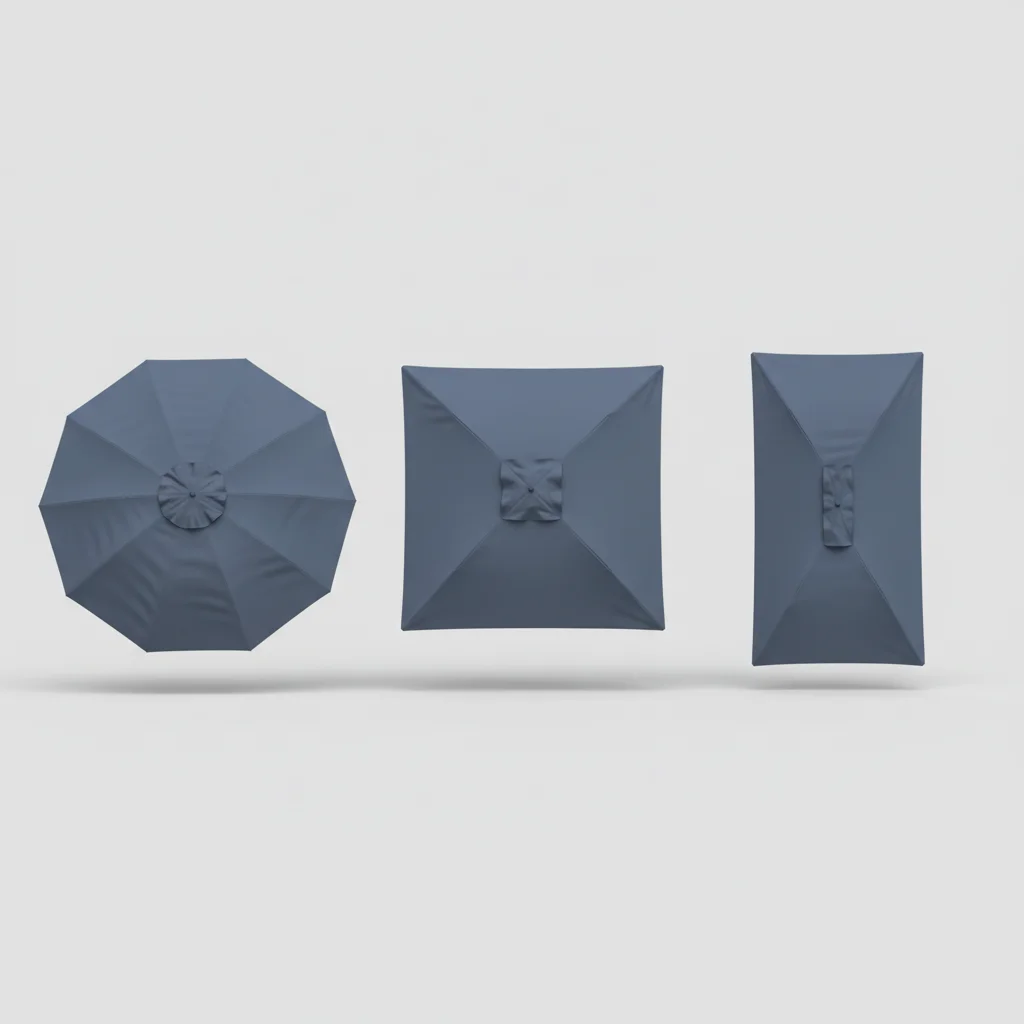
The shape of a patio umbrella canopy significantly impacts its wind resistance, with round and octagonal designs generally offering superior stability in breezy conditions compared to square or rectangular options. This is primarily due to how different shapes interact with airflow, distributing pressure more evenly and reducing the surface area that directly catches the wind.
How Canopy Shape Influences Airflow
Round and octagonal patio umbrella canopies tend to allow wind to flow more smoothly around their curved surfaces. This aerodynamic advantage minimizes the direct impact of gusts, preventing the canopy from acting like a sail. In contrast, square and rectangular canopies have flat sides and sharp corners that create more resistance, making them more susceptible to catching the wind and potentially tipping over or sustaining damage. For more patio umbrellas guides on this site.
The Role of Vents and Fabric Tension
While canopy shape is crucial, other design elements also contribute to wind resistance. Vented canopies, regardless of shape, allow air to pass through, further reducing pressure buildup. Additionally, the tension of the fabric plays a role; a taut canopy is less likely to flap and catch wind than a loose one. When considering a new umbrella, look for designs that combine an aerodynamic shape with effective venting and well-tensioned fabric.
- Round canopies: Excellent for even wind distribution.
- Octagonal canopies: Good balance of coverage and wind resistance.
- Square canopies: More prone to catching wind, especially larger sizes.
- Rectangular canopies: Best for specific coverage needs, but less wind-resistant.
- Vented designs: Essential for any shape in windy areas.
Choosing the Right Shape for Your Environment
|
Our Picks for the Best Patio Umbrella in 2026
As an Amazon Associate I earn from qualifying purchases.
|
||
| Num | Product | Action |
|---|---|---|
| 1 | BACKYARD EXPRESSIONS PATIO · HOME · GARDEN 911554 21 Pound Umbrella Base, Bronze |

|
| 2 | 9FT Auto-Tilt Patio Umbrella|Outdoor Market Table Umbrella with 8 Fiberglass Ribs for Pool,Deck&Backyard |
|
| 3 | MASTERCANOPY Patio Umbrella 9 ft Replacement Canopy for 8 Ribs-Burgundy Canopy Only |
|
| 4 | JEAREY 7.5FT Patio Umbrella Outdoor Market Umbrella with 6 Sturdy Ribs, Push Button Tilt/Crank Table Umbrella for Garden, Deck, Backyard and Pool, Royal Blue |
|
| 5 | ABCCANOPY 9ft Outdoor Umbrella Replacement Top Suit 8 Ribs (Turquoise) |
|
| 6 | 9ft Patio Umbrella with Push Button Tilt and Crank,Outdoor Market Table Umbrella UV Protection 8 Sturdy Ribs for Backyard,Garden,Pool,Deck |
|
| 7 | AreShark 9FT Patio Umbrella with Solar Lights, 32 LED Lighted Pool Umbrella w/Tilt and Crank, Outdoor Market Solar Umbrellas for Garden, Deck, Backyard, Pool and Beach, Light Gray |
|
| 8 | Kingdura 9ft 3-Tier Patio Umbrella, Outdoor Table Umbrella with Easy Crank & Tilt, 8 Reinforced Ribs, UV Protection for Deck, Pool, Market, Backyard (Beige) |
|
| 9 | ABCCANOPY 7.5ft Scalloped Patio Umbrella, Outdoor Table Umbrella with Tilt and Crank, Fiberglass Ribs Deck Umbrella for Patio, Pool, Garden, Picnic (Turquoise) |
|
| 10 | JEAREY 9 FT Patio Umbrella Outdoor, Table Umbrellas Market Umbrella w/Push Button Tilt/Crank, 8 Sturdy Ribs(Cerulean) |
|
For consistently windy locations, a round or octagonal patio umbrella is the most practical choice. If your outdoor space is more sheltered or you prioritize maximum coverage for a long dining table, a rectangular or square umbrella might be suitable, but it’s crucial to pair it with a heavy-duty base and consider additional anchoring. Always assess your local wind conditions before making a final decision on canopy shape.
Ultimately, the best patio umbrella canopy shape for wind resistance depends on a combination of factors including local weather patterns, the size of the umbrella, and the quality of its construction. Prioritizing round or octagonal shapes, especially those with double vents, will provide the most peace of mind in blustery conditions.
Maintenance and Stability Tips for All Shapes
Even with the most wind-resistant canopy shape, proper maintenance and additional stability measures are vital. Always close your patio umbrella when not in use or during strong winds. Regularly check the base and pole for any signs of wear or instability. For added security, consider using sandbags or specialized umbrella anchors, particularly with larger or less aerodynamic canopy shapes.
Get our weekly buyer guide
Practical specs, not advice. Unsubscribe anytime.
