Imagine a perfect afternoon on your patio, only for a sudden gust of wind to send your shade provider tumbling. This common scenario highlights a crucial challenge for many homeowners: finding a patio umbrella that stands firm against unpredictable breezes. A reliable patio umbrella is more than just a decorative accent; it’s an essential outdoor fixture, offering comfort and protection from the elements. This guide will walk you through the world of wind-resistant patio umbrellas, focusing on the features and designs that ensure stability and durability, even on the breeziest days. By understanding the key factors and exploring top models for 2026, you can select the perfect umbrella to enhance your outdoor living space without worry.
Introduction to Patio Umbrellas
A patio umbrella serves as a versatile outdoor shade solution, designed to provide relief from the sun and light rain. Beyond its practical function, it significantly contributes to the aesthetic appeal of any garden, deck, or terrace, creating an inviting atmosphere. Historically, umbrellas have offered personal shade for centuries, evolving into the larger, more robust patio versions we see today, tailored for outdoor living spaces.
Currently, the market offers several popular types of patio umbrellas, each with distinct advantages. Market umbrellas, also known as center-pole umbrellas, feature a central pole that often fits through a hole in a patio table. Cantilever umbrellas, or offset umbrellas, have their support pole positioned to the side, allowing the canopy to hang freely over a designated area. Wall-mounted umbrellas attach directly to a wall or sturdy structure, ideal for spaces where a traditional base might be impractical. While all types provide shade, their structural differences significantly impact their wind resistance, a critical factor for long-term enjoyment. For expert patio umbrellas reviews on this site.
Why You Need a Patio Umbrella
Investing in a high-quality patio umbrella offers a multitude of benefits, transforming your outdoor area into a more functional and enjoyable space. Primarily, these umbrellas provide crucial protection from the harsh sun and its harmful UV rays, safeguarding both you and your outdoor furniture from sun damage and fading. They create a cool, shaded retreat, making even the hottest days more comfortable for relaxation or entertaining.
Beyond protection, a well-chosen patio umbrella significantly enhances the aesthetic appeal of your exterior, adding a touch of style and sophistication. It acts as a focal point, complementing your outdoor decor and elevating the overall ambiance. Ultimately, a stable and durable patio umbrella extends your usable living space, allowing you to enjoy meals, conversations, or quiet moments outdoors without interruption, regardless of mild weather conditions.
Factors to Consider When Choosing a Patio Umbrella for Windy Conditions
Selecting a patio umbrella that can withstand windy conditions requires careful consideration of several key elements. Not all umbrellas are created equal, and specific design features and material choices play a pivotal role in determining their stability and longevity in breezy environments. Understanding these factors is essential for making an informed purchase that ensures both safety and satisfaction.
Size and Shape
|
Our Picks for the Best Patio Umbrella in 2026
As an Amazon Associate I earn from qualifying purchases.
|
||
| Num | Product | Action |
|---|---|---|
| 1 | AreShark 9FT Patio Umbrella with Solar Lights, 32 LED Lighted Pool Umbrella w/Tilt and Crank, Outdoor Market Solar Umbrellas for Garden, Deck, Backyard, Pool and Beach, Light Gray |

|
| 2 | ABCCANOPY 7.5ft Scalloped Patio Umbrella, Outdoor Table Umbrella with Tilt and Crank, Fiberglass Ribs Deck Umbrella for Patio, Pool, Garden, Picnic (Turquoise) |
|
| 3 | MASTERCANOPY Patio Umbrella 9 ft Replacement Canopy for 8 Ribs-Burgundy Canopy Only |
|
| 4 | ABCCANOPY 9ft Outdoor Umbrella Replacement Top Suit 8 Ribs (Turquoise) |
|
| 5 | JEAREY 7.5FT Patio Umbrella Outdoor Market Umbrella with 6 Sturdy Ribs, Push Button Tilt/Crank Table Umbrella for Garden, Deck, Backyard and Pool, Royal Blue |
|
| 6 | BACKYARD EXPRESSIONS PATIO · HOME · GARDEN 911554 21 Pound Umbrella Base, Bronze |
|
| 7 | 9ft Patio Umbrella with Push Button Tilt and Crank,Outdoor Market Table Umbrella UV Protection 8 Sturdy Ribs for Backyard,Garden,Pool,Deck |
|
| 8 | JEAREY 9 FT Patio Umbrella Outdoor, Table Umbrellas Market Umbrella w/Push Button Tilt/Crank, 8 Sturdy Ribs(Cerulean) |
|
| 9 | Kingdura 9ft 3-Tier Patio Umbrella, Outdoor Table Umbrella with Easy Crank & Tilt, 8 Reinforced Ribs, UV Protection for Deck, Pool, Market, Backyard (Beige) |
|
| 10 | 9FT Auto-Tilt Patio Umbrella|Outdoor Market Table Umbrella with 8 Fiberglass Ribs for Pool,Deck&Backyard |
|
The size and shape of a patio umbrella directly influence its susceptibility to wind. Larger canopies present a greater surface area for wind to catch, potentially increasing instability. When choosing, consider the dimensions of your outdoor space and the furniture it needs to shade. For instance, a small, round umbrella might suit a bistro set, while a larger rectangular model could cover a dining table. While no shape inherently offers absolute wind immunity, some designs like those with aerodynamic profiles or well-placed vents can mitigate wind resistance. It’s crucial to match the umbrella’s size to the intended application and the general wind exposure of your location, opting for a model that won’t overwhelm your patio or be easily buffeted.
Material
The materials used in a patio umbrella’s construction are paramount, especially when facing windy conditions. High-quality materials contribute significantly to the umbrella’s overall durability and wind resistance.
- Canopy Fabric: Look for fabrics that are not only UV-resistant and fade-proof but also robust enough to withstand tension and flapping in the wind. Solution-dyed polyester (SDP) and acrylic fabrics (like Sunbrella) are excellent choices due to their strength and colorfastness. A crucial feature for wind resistance is a vented canopy, often with a single or double-tier design. These vents allow air to pass through the canopy rather than getting trapped underneath, significantly reducing uplift and preventing the umbrella from acting like a sail. Marine-grade materials are also known for their resilience against various weather elements, including strong winds.
- Frame Material: The strength of the umbrella’s frame is fundamental. Fiberglass ribs are highly recommended as they offer flexibility, bending under pressure from wind gusts and returning to their original shape without breaking. This contrasts with more rigid materials that might snap. Commercial-grade aluminum and marine-grade aluminum frames are popular for their lightweight yet durable, rust-resistant properties. Steel frames provide excellent strength but can be heavy and prone to rust if not properly treated. While wood frames offer a classic aesthetic, ensure they are constructed from high-quality hardwoods with sturdy joinery, specifically designed to withstand windy conditions, as untreated wood can degrade over time.
Style and Design
The overall style and design of a patio umbrella also impact its performance in windy conditions, often dictating how force is distributed and managed.
- Cantilever Umbrellas: These offset designs are popular for their expansive shade coverage and flexible positioning, as the pole is to the side, leaving the area beneath clear. While generally perceived as less stable due to their offset nature, high-quality cantilever umbrellas specifically engineered for wind resistance can perform exceptionally well. They typically feature heavy, reinforced bases and robust frames that allow the canopy to sway gently with the wind rather than tipping over. For very exposed areas, in-ground or bolted mounting systems further enhance their stability.
- Center Pole Umbrellas: The classic center pole design often provides good inherent stability, especially when its pole passes through a sturdy patio table and is secured by a sufficiently heavy base. This configuration distributes weight evenly, making them less prone to tipping than some cantilever models if properly anchored. They are generally more affordable and easier to manage in moderate wind.
- Wall-Mounted Umbrellas: Offering a unique solution for compact spaces or areas with high wind exposure, wall-mounted umbrellas attach directly to a building or robust railing. This direct attachment provides superior stability, effectively eliminating the need for a heavy base and reducing the footprint. However, their fixed position means less flexibility in shade adjustment and they are not easily moved.
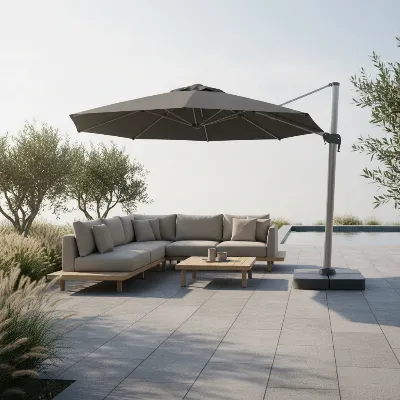 A sleek cantilever patio umbrella with a double-vented canopy standing firm on a breezy patio, showcasing a heavy, low-profile base. The background shows a modern outdoor living space with light wind movement.
Additional Features
Beyond the core structural elements, several supplementary features can significantly enhance a patio umbrella’s ability to endure windy conditions and improve the overall user experience.
- Vented Canopies: As mentioned, these are critical for wind resistance, allowing air to escape and reducing the uplift pressure that can cause an umbrella to flip or fly away. Double-tiered vents provide even better airflow management.
- Flexible Rib Construction: Umbrellas with fiberglass ribs are designed to flex and absorb the energy of wind gusts, preventing breakage and extending the lifespan of the canopy frame.
- Verified Wind Ratings: Some premium manufacturers provide specific wind ratings, indicating the maximum wind speed their umbrellas are designed to withstand. Looking for these ratings can offer an extra layer of confidence in the umbrella’s durability.
- Heavy-Duty Bases: A sufficiently weighted base is non-negotiable for wind resistance. For standard market umbrellas, a base of at least 50 pounds is recommended, while cantilever umbrellas, due to their offset design, often require 100 pounds or more, sometimes achieved through fillable sections with sand or water.
- Reinforced Joints and Connection Points: Stronger, well-engineered joints throughout the frame contribute to the umbrella’s structural integrity, allowing it to better withstand the bending and twisting forces imposed by wind.
- Telescopic Function: Some umbrellas offer a telescopic feature, allowing them to be easily lowered and closed before anticipated storms or when not in use, reducing their exposure to high winds.
Comparing Popular Patio Umbrella Types
Choosing the right type of patio umbrella depends heavily on your specific needs, available space, and crucially, the wind conditions of your location. Each style—center pole, cantilever, and wall-mounted—comes with its own set of advantages and disadvantages, particularly concerning stability in breezy environments.
Comparison Table
| Feature | Center Pole Umbrella | Cantilever Umbrella | Wall-Mounted Umbrella |
|---|---|---|---|
| Pros | Generally more affordable, easy to set up, good stability when combined with a table and heavy base. | Offers extensive, unobstructed shade, highly flexible positioning and angling of the canopy. | Excellent for limited spaces, superior inherent stability as it’s directly affixed to a structure. |
| Cons | Limited coverage area directly beneath, requires a heavy base (and often a table) for optimal stability in wind. | Higher initial cost, requires a very substantial base or secure mounting system, can be more susceptible to strong, erratic gusts if not properly anchored. | Fixed position limits shade flexibility, installation is more permanent, not easily moved or relocated. |
| Wind Resistance Note | Relies heavily on base weight and securing to a table. Vented canopies and strong ribs are key. | Requires exceptionally heavy bases (100+ lbs) or ground anchors. Flexible ribs and vents are essential for performance. | Highest inherent stability due to direct structural attachment, but canopy still needs robust materials and vents. |
Guide to Buying a Patio Umbrella
Purchasing a patio umbrella, especially one designed for windy conditions, involves more than just picking an appealing color. A systematic approach ensures you select a model that meets your practical needs, aesthetic preferences, and critically, your local weather challenges.
Determine Usage Needs
Start by assessing how and where the umbrella will be used. Consider the exact area you need to shade; a small balcony will have different requirements than a large dining patio or an expansive pool deck. Think about your budget, remembering that higher quality, wind-resistant features often come with a higher price tag, but offer better long-term value. Reflect on your architectural style to choose an umbrella that complements your outdoor decor. Most importantly, evaluate the prevailing wind conditions in your specific location. Is it generally calm with occasional breezes, or are strong, frequent gusts a regular occurrence? This assessment will guide your choice towards the most appropriate type and durability level.
Research Product Information
Once you have a clear idea of your needs, dive into product research. Begin by reading user reviews, specifically looking for comments on an umbrella’s performance in windy weather. Pay attention to how users describe its stability, frame integrity, and canopy durability. Compare prices from various reputable vendors to ensure you’re getting a competitive deal, but be wary of unusually low prices for umbrellas claiming high wind resistance. Carefully examine product specifications for details on frame materials (e.g., marine-grade aluminum, fiberglass ribs), canopy fabric type (e.g., Sunbrella, solution-dyed polyester), and whether it features a vented design. Also, inquire about warranty and return policies, especially regarding wind damage, as a comprehensive warranty can indicate manufacturer confidence in their product’s resilience.
Purchase and Installation
When you’re ready to buy, choose reputable retailers known for quality outdoor furniture and excellent customer service. Once purchased, proper installation is critical for ensuring your umbrella performs as expected, particularly in wind. Follow the installation guide meticulously. For center-pole umbrellas, ensure the pole is securely tightened within its base and, if applicable, through the patio table. For cantilever umbrellas, the base must be filled with the recommended weight (sand is often preferred over water for density) or securely anchored. Consider using an umbrella cone wedge to fill any gaps between the pole and table hole, further enhancing stability and preventing wobbling. Always double-check all components before final assembly and use to confirm everything is secure and undamaged.
Top 10 Best Patio Umbrellas for Windy Days in 2026
When facing unpredictable gusts, investing in a patio umbrella engineered for superior wind resistance is paramount. Here are the top 10 models for 2026, known for their robust construction, innovative features, and exceptional stability, making them ideal choices for breezy outdoor spaces.
- Shademaker Astral Cantilever Umbrella: Often cited as a top performer for high winds, the Astral boasts commercial-grade frame materials and a robust design. It’s built to withstand challenging conditions, making it a favorite for exposed locations.
- FiberBuilt Umbrellas (e.g., Lucaya Series): Renowned for their fiberglass rib systems, these umbrellas feature ribs that flex under wind pressure and return to their original shape, significantly reducing stress and improving long-term durability. They are designed for high-wind coastal use.
- Grand Patio Deluxe Napoli Cantilever Umbrella: This model consistently receives high marks for its secure, weighted base (often fillable with sand) and weather-resistant design. Its Sunbrella fabric canopy adds to its durability and UV protection.
- Bambrella Hurricane Series: Engineered with strength and sustainability in mind, Bambrella umbrellas are known for their robust construction, often utilizing laminated bamboo and marine-grade components, making them an excellent choice for windy environments.
- Shadowspec Unity Cantilever Umbrella: Featuring advanced engineering and often wind tunnel-tested designs, Shadowspec umbrellas offer premium cantilever strength with marine-grade aluminum frames, ensuring stability in challenging weather.
- EliteShade 9FT1L Market Umbrella: This umbrella stands out with its solution-dyed acrylic fabric, offering a 10-year non-fading warranty, and a top-vent design that allows airflow. Its heavy-duty alloy steel frame provides substantial stability compared to standard aluminum.
- PURPLE LEAF Heavy Duty Cantilever/Market Umbrellas: Known for incorporating effective wind venting and premium fabric quality, PURPLE LEAF offers various heavy-duty models designed to maintain stability even during significant gusts.
- Outer Marine-Grade Aluminum Outdoor Umbrella: Constructed from marine-grade aluminum, this umbrella resists sun and water damage. Its vented canopy prevents wind from getting trapped, and the fade-resistant fabric blocks a high percentage of UV rays.
- Frontgate 10-Foot Cantilever Umbrella with Base: A premium option, Frontgate offers cantilever umbrellas featuring durable frames and high-quality Sunbrella canopies. The inclusion of a robust base is key to its stability in windy conditions.
- L.L. Bean Sunbrella Market Umbrella: For those seeking a classic market style with dependable wind performance, this L.L. Bean umbrella uses durable Sunbrella fabric for excellent UV blocking and weather resistance, suitable for moderate wind environments when properly weighted.
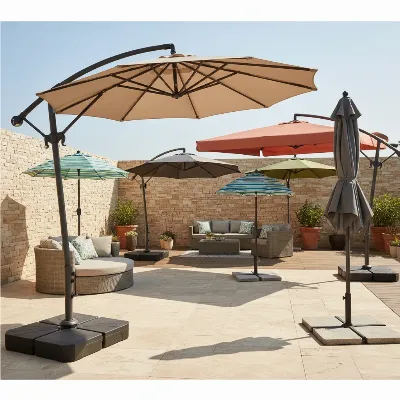 A collection of diverse, high-performance patio umbrellas specifically designed for windy conditions, featuring various styles, strong frames, and vented canopies in a well-lit outdoor setting.
Mẹo bảo quản Dù che nắng sân vườn
Proper maintenance is key to extending the life of your patio umbrella, especially when it’s frequently exposed to wind. Taking a few proactive steps can ensure your investment remains a source of shade and enjoyment for years to come.
- Vệ sinh thường xuyên: Regularly clean your umbrella canopy to prevent the buildup of dirt, mildew, and other debris. Use a mild soap and water solution, scrubbing gently with a soft brush, then rinse thoroughly and allow it to air dry completely before closing. This prevents fabric degradation that could make it more susceptible to wind damage.
- Bảo quản khi không sử dụng: When not in use, especially during periods of anticipated high winds or storms, always close your patio umbrella. For added protection, secure it with a tie strap if available. For larger cantilever models, consider purchasing a protective cover. During severe weather or the off-season, it’s best to store the umbrella indoors or completely remove the canopy to prevent damage.
- Kiểm tra và bảo dưỡng định kỳ: Periodically inspect all components of your umbrella, including the frame, ribs, pole, and base. Look for any signs of wear, rust, loose bolts, or cracks. Tighten any screws or bolts that may have loosened over time due to wind vibration. Replace worn-out parts promptly to maintain the umbrella’s structural integrity and ensure it remains stable in windy conditions. Regular checks can prevent minor issues from escalating into significant damage.
Conclusion
Choosing the right patio umbrella for windy days is an investment in comfort, safety, and the longevity of your outdoor living space. By focusing on critical features such as durable frame materials like marine-grade aluminum or flexible fiberglass ribs, high-quality vented canopies, and adequately weighted or secured bases, you can find a patio umbrella that stands up to the challenge. Whether you prefer the classic stability of a center pole, the expansive shade of a cantilever, or the space-saving design of a wall-mounted model, the market offers robust solutions. Prioritizing these wind-resistant attributes ensures your outdoor oasis remains a serene haven, unbothered by blustery weather.
What measures will you take to ensure your new patio umbrella withstands the windiest days?
Frequently Asked Questions
How much weight do I need for my patio umbrella base in windy conditions?
For standard market umbrellas, a base weighing at least 50 pounds is generally recommended. For larger or cantilever umbrellas, which experience greater wind force due to their offset design, bases weighing 100 pounds or more are often required to ensure adequate stability and prevent tipping in breezy conditions.
What is a vented canopy and why is it important for wind resistance?
A vented canopy features an opening or multiple tiers at the top of the umbrella. This design allows air to pass through the canopy rather than becoming trapped underneath, which significantly reduces the uplift pressure and prevents the umbrella from acting like a sail, thereby enhancing its stability in windy conditions.
Are cantilever umbrellas good for windy areas?
Cantilever umbrellas can be excellent for windy areas, provided they are specifically designed for wind resistance. This means they must have very heavy bases (often 100+ pounds or ground-mounted systems), robust, reinforced frames, and ideally, vented canopies and flexible ribs to manage wind forces effectively.
What materials make an umbrella wind-resistant?
Key materials for wind-resistant umbrellas include fiberglass ribs (for flexibility), commercial or marine-grade aluminum frames (for strength and rust resistance), and high-quality canopy fabrics like solution-dyed polyester or acrylic (for durability and tear resistance). Vented canopies are also a critical design feature.
How do I secure my patio umbrella from blowing away?
To secure your patio umbrella, ensure it has a sufficiently heavy base for its size, preferably filled with sand for maximum density. If used with a table, tighten the pole into the table and consider an umbrella cone wedge to fill any gaps. Additionally, close and secure the umbrella during high winds or when not in use.
Get our weekly buyer guide
Practical specs, not advice. Unsubscribe anytime.
