Is your balcony battling relentless gusts, making outdoor relaxation a constant struggle? A robust, wind-resistant patio umbrella isn’t just a luxury; it’s an essential upgrade for urban dwellers and anyone seeking shade in exposed spaces. These specialized umbrellas are engineered to defy strong breezes, transforming your balcony into a serene retreat where you can enjoy fresh air and sunshine without fear of your umbrella taking flight. This comprehensive guide, informed by over a decade of experience with patio umbrellas, will walk you through everything you need to know to select the perfect wind-resistant model for your specific balcony needs.
Introduction to Wind Resistant Patio Umbrellas
Patio umbrellas, at their core, are designed to provide shade, creating a comfortable outdoor environment. Their history stretches back to ancient civilizations, evolving from simple fabric covers to sophisticated, engineered structures. For balconies, however, standard models often fall short, struggling against the unique wind patterns and limited space. Wind-resistant patio umbrellas address these challenges by incorporating enhanced design features and durable materials to withstand stronger gusts, providing reliable shelter and stability even in exposed settings. While the market offers a wide array, from traditional center-pole designs to modern cantilever and wall-mounted options, the key for balcony use lies in their stability and construction.
Why You Need a Wind Resistant Patio Umbrella for Your Balcony
A well-chosen patio umbrella offers multifaceted benefits, especially crucial on a balcony. Firstly, it provides vital protection from harsh sunlight and harmful UV rays, safeguarding your skin and preventing outdoor furniture from fading. Secondly, it creates a significantly cooler and more comfortable microclimate, allowing you to enjoy your balcony during peak sun hours. Beyond practicality, a stylish umbrella enhances the aesthetic appeal of your outdoor space, turning a simple balcony into an inviting extension of your home. Ultimately, it expands your usable living and entertainment area, making your balcony a genuinely functional and enjoyable part of your property, regardless of the weather.
Key Factors When Choosing a Wind Resistant Patio Umbrella
Selecting the right wind-resistant patio umbrella involves careful consideration of several critical elements to ensure it meets both your aesthetic desires and practical demands.
Size and Shape
|
Our Picks for the Best Patio Umbrella in 2026
As an Amazon Associate I earn from qualifying purchases.
|
||
| Num | Product | Action |
|---|---|---|
| 1 | BACKYARD EXPRESSIONS PATIO · HOME · GARDEN 911554 21 Pound Umbrella Base, Bronze |

|
| 2 | MASTERCANOPY Patio Umbrella 9 ft Replacement Canopy for 8 Ribs-Burgundy Canopy Only |
|
| 3 | 9ft Patio Umbrella with Push Button Tilt and Crank,Outdoor Market Table Umbrella UV Protection 8 Sturdy Ribs for Backyard,Garden,Pool,Deck |
|
| 4 | 9FT Auto-Tilt Patio Umbrella|Outdoor Market Table Umbrella with 8 Fiberglass Ribs for Pool,Deck&Backyard |
|
| 5 | JEAREY 7.5FT Patio Umbrella Outdoor Market Umbrella with 6 Sturdy Ribs, Push Button Tilt/Crank Table Umbrella for Garden, Deck, Backyard and Pool, Royal Blue |
|
| 6 | AreShark 9FT Patio Umbrella with Solar Lights, 32 LED Lighted Pool Umbrella w/Tilt and Crank, Outdoor Market Solar Umbrellas for Garden, Deck, Backyard, Pool and Beach, Light Gray |
|
| 7 | Kingdura 9ft 3-Tier Patio Umbrella, Outdoor Table Umbrella with Easy Crank & Tilt, 8 Reinforced Ribs, UV Protection for Deck, Pool, Market, Backyard (Beige) |
|
| 8 | ABCCANOPY 7.5ft Scalloped Patio Umbrella, Outdoor Table Umbrella with Tilt and Crank, Fiberglass Ribs Deck Umbrella for Patio, Pool, Garden, Picnic (Turquoise) |
|
| 9 | ABCCANOPY 9ft Outdoor Umbrella Replacement Top Suit 8 Ribs (Turquoise) |
|
| 10 | JEAREY 9 FT Patio Umbrella Outdoor, Table Umbrellas Market Umbrella w/Push Button Tilt/Crank, 8 Sturdy Ribs(Cerulean) |
|
For balconies, size and shape are paramount due to spatial constraints. Rectangular or half-round umbrellas often fit better against walls or railings, maximizing coverage without overwhelming the limited footprint. Common sizes for balconies might range from 6 to 9 feet in diameter for round umbrellas, or 6×9 to 7×10 feet for rectangular ones. Measure your balcony and the area you wish to shade, factoring in any existing furniture, to ensure a snug and effective fit. An umbrella that is too large can hinder movement and appear disproportionate, while one too small won’t provide adequate shade.
Material Quality
The durability and wind resistance of an umbrella are heavily dependent on its materials. For the canopy, solution-dyed acrylic (like Sunbrella) or high-density polyester (like olefin) are excellent choices. These fabrics are not only UV-resistant and fade-resistant but also hold up well against tearing and fraying in windy conditions. The frame material is equally critical. Aluminum frames are lightweight yet strong, rust-resistant, and ideal for coastal areas. Steel frames offer superior strength but can be heavier and susceptible to rust if not properly coated. Wood frames, while aesthetically pleasing, require more maintenance and may not offer the same flexibility or robust wind resistance as metal options.
Style and Design
The style of your patio umbrella impacts both its stability and how it integrates with your balcony’s design.
- Center-pole umbrellas are classic, often more affordable, and generally stable when properly weighted. For balconies, they can be a good choice if you have a table with a center hole.
- Cantilever (offset) umbrellas offer broad, unobstructed shade as their pole is to the side. While great for maximizing space, they require a heavy base and a robust frame to withstand wind. Look for models with reinforced arms and vents.
- Wall-mounted umbrellas are a brilliant space-saving solution for smaller balconies, attaching directly to a wall. They free up floor space and, when securely installed, can be quite stable against wind, though their range of motion might be limited.
> “The structural integrity of a wind-resistant patio umbrella comes down to two things: a robust frame made of quality material and a well-vented canopy. Don’t compromise on either for balcony use.” – Admin, ReviewInth.com
Additional Features for Wind Resistance and Convenience
Modern patio umbrellas come with a host of features that enhance their functionality and durability. Wind vents, often double-tiered, are crucial for wind resistance; they allow air to pass through the canopy, reducing uplift and preventing the umbrella from toppling or getting damaged. Crank lift systems and tilt mechanisms offer ease of use, allowing you to quickly open, close, and adjust the umbrella’s angle to block the sun. Some models include integrated LED lighting for evening ambiance or even Bluetooth speakers, transforming your balcony into a versatile outdoor living space. Always prioritize features that directly contribute to stability and durability when choosing for a windy balcony.
Comparing Popular Patio Umbrella Types for Balconies
Understanding the distinct characteristics of each umbrella type is essential for making an informed decision, particularly for a balcony setting where wind and space are key considerations.
Table: Comparing Umbrella Types for Balcony Use
| Feature | Center-Pole Umbrella | Cantilever (Offset) Umbrella | Wall-Mounted Umbrella |
|---|---|---|---|
| Pros for Balcony | Stable with proper base, generally more compact sizes, good for tables. | Frees up floor space, broad shade coverage, flexible positioning. | Maximizes floor space, very stable when securely installed, sleek. |
| Cons for Balcony | Pole can obstruct space, less adaptable shade angle. | Requires heavy base (floor space), can be less wind-stable if not heavy-duty. | Fixed to wall, may have limited range of motion, installation required. |
| Wind Resistance | Good with heavy base, simpler design. | Requires robust frame, large vents, and very heavy base. | Excellent when correctly mounted, minimal floor interaction. |
| Space Efficiency | Moderate, depends on base footprint. | Good for clear floor space, but base takes up significant area. | Excellent, no floor space used. |
| Cost | Generally most affordable. | Higher cost due to complex mechanism and heavy base. | Moderate to high, depends on features and mounting hardware. |
Your Guide to Buying a Wind Resistant Balcony Umbrella
Navigating the market for the perfect wind-resistant balcony umbrella can be straightforward if you follow a structured approach.
Determine Your Specific Needs
Start by evaluating your balcony’s unique characteristics. How much direct sunlight does it receive, and at what times of day? What is the prevailing wind direction and strength? How much space can you realistically allocate for the umbrella, including its base? Consider your budget, as wind-resistant features and durable materials often come with a higher price tag. Lastly, think about your personal style and how the umbrella will complement your existing outdoor decor. A clear understanding of these factors will narrow down your options significantly.
Research and Compare Products
Once you have a clear idea of your needs, dive into product research. Read reviews from other users, paying close attention to comments about wind performance and durability. Compare specifications like fabric density, frame material, and base weight. Look for warranties that cover wind damage or material defects, indicating the manufacturer’s confidence in their product. Websites of reputable outdoor furniture retailers, home improvement stores, and specialized umbrella brands are good places to start your comparison.
Purchase and Installation Considerations
Always buy from a reputable retailer known for quality outdoor products. When your umbrella arrives, carefully inspect it for any damage or missing parts before assembly. Follow the manufacturer’s installation instructions precisely, especially for wall-mounted or cantilever models that require secure anchoring. For freestanding umbrellas, invest in a heavy-duty base specifically designed to prevent tipping in wind. Sand or water-filled bases are generally less effective than solid concrete or steel bases for wind resistance. Proper installation is critical for both the umbrella’s longevity and your safety.
Top Wind-Resistant Patio Umbrellas for Balconies in 2026
When choosing a wind-resistant patio umbrella for your balcony in 2026, focus on categories known for their durability and engineering.
- Heavy-Duty Crank-Lift Umbrellas with Vents: These traditional center-pole designs are a perennial favorite for their balance of stability and ease of use. Look for models featuring reinforced aluminum or steel poles, 1.5-2 inch diameters, and at least a double-vented canopy made from solution-dyed acrylic. The crank mechanism allows for easy opening and closing, which is crucial when sudden gusts appear. Pairing these with a substantial base (50+ lbs for an 8-foot umbrella) ensures maximum stability.
- Compact Cantilever Umbrellas with Reinforced Frames: For those who desire an unobstructed space, compact cantilever umbrellas (typically 7-9 feet) with heavy-gauge aluminum frames are ideal. These models should feature extra-strong ribs, multi-vented canopies, and a broad, cross-base design that can accommodate multiple paver weights or a water/sand-filled base. Their offset pole design provides flexible shade without a central obstruction.
- Wall-Mounted Balcony Umbrellas: Offering the ultimate in space-saving, these umbrellas attach directly to your balcony wall. The best wind-resistant versions utilize robust, rust-resistant mounting hardware and a durable arm mechanism. Their canopy often features a half-round or rectangular shape, with a heavy-duty, fade-resistant fabric and a reliable opening/closing system, such as a pulley or crank. These are particularly effective in preventing uplift as they are firmly anchored.
- Fiberglass Ribbed Umbrellas: Umbrellas featuring fiberglass ribs are an excellent choice for wind resistance. Unlike traditional steel or aluminum ribs that can bend or break, fiberglass ribs flex with the wind, absorbing the force and returning to their original shape. This makes them exceptionally durable and less prone to damage in high winds, perfect for exposed balcony locations.
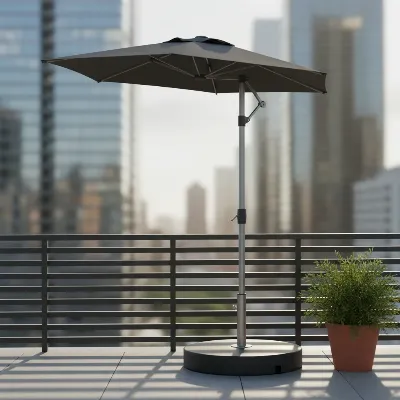 A modern wind-resistant patio umbrella on a chic city balcony, featuring a dark grey canopy, a sturdy aluminum pole, and a heavy base, with a lush green plant nearby and urban buildings in the background under soft, bright sunlight.
Essential Maintenance Tips for Your Patio Umbrella
Proper maintenance significantly extends the life and performance of your wind-resistant patio umbrella. Regular cleaning is crucial; gently brush off loose dirt, then wash the canopy with a mild soap and water solution, rinsing thoroughly. Ensure the fabric is completely dry before folding and storing to prevent mildew. When not in use, especially during severe weather forecasts or off-season, always close and secure your umbrella. If possible, remove the canopy and store the frame indoors or under a protective cover. Periodically check all moving parts, screws, and the base for any signs of wear or loosening, tightening or replacing components as needed. Proactive care ensures your umbrella remains a reliable shade provider for years.
Conclusion
Choosing the right wind-resistant patio umbrella for your balcony can transform your outdoor space into a protected, comfortable, and stylish haven. By prioritizing sturdy materials, intelligent design features like wind vents, and appropriate sizing, you can confidently select an umbrella that stands up to the elements. Remember to consider your balcony’s unique wind patterns and space limitations, and invest in a high-quality product that promises durability and reliable performance. With the right umbrella, your balcony will become your favorite spot to relax, dine, or entertain, regardless of the sun or breeze. Which wind-resistant feature will be your top priority for your balcony oasis?
Frequently Asked Questions
What makes a patio umbrella truly wind resistant?
True wind resistance in a Patio Umbrella stems from a combination of design and material. Key features include a robust frame (often aluminum or steel), heavy-duty and well-ventilated canopies (like solution-dyed acrylic or olefin with multiple vents), and a very heavy, stable base. Reinforced ribs and flexible fiberglass ribs also contribute significantly to its ability to withstand strong gusts without damage.
Can I leave my wind-resistant umbrella open in all weather conditions?
Even the most wind-resistant umbrellas are not designed to be left open in extreme weather conditions such as high winds, heavy rain, or thunderstorms. While they can handle moderate gusts, it’s always best practice to close and secure your umbrella when severe weather is anticipated to prevent potential damage to the umbrella or surrounding property.
What kind of base do I need for a balcony umbrella to be wind resistant?
For a wind-resistant balcony umbrella, a base that is significantly heavier than standard models is crucial. For center-pole umbrellas, opt for solid concrete or steel bases weighing at least 50-70 pounds for an 8-foot umbrella. For cantilever umbrellas, cross bases requiring multiple paver weights or large water/sand-filled bases are necessary. Wall-mounted umbrellas rely on secure, professional installation.
Are cantilever umbrellas suitable for windy balconies?
Cantilever umbrellas can be suitable for windy balconies, but they require particular attention to construction. Look for models specifically marketed as “heavy-duty” or “wind-resistant,” featuring thick, reinforced poles, multiple canopy vents, and a very substantial base system. Their large canopy size means they catch more wind, so stability enhancements are non-negotiable.
How do I measure my balcony for the right umbrella size?
To measure your balcony, determine the area you want to shade and measure its length and width. Also, consider the height clearance and any obstructions like railings or walls. For freestanding umbrellas, measure the available floor space for the base. This will help you choose an umbrella shape and size that provides optimal shade without overcrowding your valuable balcony space.