The gentle hum of an afternoon breeze can quickly turn into a frustrating gust, sending your patio umbrella tumbling across your yard or, worse, into your neighbor’s property. A runaway patio umbrella isn’t just an inconvenience; it poses a significant safety hazard and can lead to costly damage to both your umbrella and surrounding items. Fortunately, you don’t need to break the bank to ensure your outdoor oasis remains serene and secure. This guide, tailored for the hands-on homeowner, explores practical, do-it-yourself methods to keep your patio umbrella firmly in place, even when the wind picks up.
Understanding Why Patio Umbrellas Blow Away
Patio umbrellas are designed to provide shade and enhance outdoor comfort, but their broad canopies are inherently susceptible to wind. When wind hits the umbrella canopy, it creates forces similar to those acting on an airplane wing: lift, which tries to pull the umbrella upwards, and drag, which pushes it horizontally. Turbulence can exacerbate these effects, making the umbrella wobble and eventually topple if not properly secured.
The most common reason for an umbrella blowing away is insufficient base weight. Many standard umbrella bases are simply not heavy enough to counteract the significant uplift and drag forces generated by even moderate winds. Additionally, some umbrella designs lack features like wind vents, which allow air to pass through the canopy, reducing the surface area that catches the wind. Flimsy frame materials and weak connections can also contribute to an umbrella’s instability. The risks associated with a blown-away umbrella are substantial, ranging from bent poles and torn canopies to shattered glass tables, damaged fences, and even serious personal injury.
Essential Factors for Patio Umbrella Stability
Achieving true patio umbrella stability requires a holistic approach, considering both the umbrella’s design and how it’s secured. Understanding these core factors is the first step in implementing effective DIY solutions.
Umbrella Design
|
Our Picks for the Best Patio Umbrella in 2026
As an Amazon Associate I earn from qualifying purchases.
|
||
| Num | Product | Action |
|---|---|---|
| 1 | Kingdura 9ft 3-Tier Patio Umbrella, Outdoor Table Umbrella with Easy Crank & Tilt, 8 Reinforced Ribs, UV Protection for Deck, Pool, Market, Backyard (Beige) |

|
| 2 | MASTERCANOPY Patio Umbrella 9 ft Replacement Canopy for 8 Ribs-Burgundy Canopy Only |
|
| 3 | JEAREY 7.5FT Patio Umbrella Outdoor Market Umbrella with 6 Sturdy Ribs, Push Button Tilt/Crank Table Umbrella for Garden, Deck, Backyard and Pool, Royal Blue |
|
| 4 | 9ft Patio Umbrella with Push Button Tilt and Crank,Outdoor Market Table Umbrella UV Protection 8 Sturdy Ribs for Backyard,Garden,Pool,Deck |
|
| 5 | ABCCANOPY 9ft Outdoor Umbrella Replacement Top Suit 8 Ribs (Turquoise) |
|
| 6 | JEAREY 9 FT Patio Umbrella Outdoor, Table Umbrellas Market Umbrella w/Push Button Tilt/Crank, 8 Sturdy Ribs(Cerulean) |
|
| 7 | AreShark 9FT Patio Umbrella with Solar Lights, 32 LED Lighted Pool Umbrella w/Tilt and Crank, Outdoor Market Solar Umbrellas for Garden, Deck, Backyard, Pool and Beach, Light Gray |
|
| 8 | BACKYARD EXPRESSIONS PATIO · HOME · GARDEN 911554 21 Pound Umbrella Base, Bronze |
|
| 9 | ABCCANOPY 7.5ft Scalloped Patio Umbrella, Outdoor Table Umbrella with Tilt and Crank, Fiberglass Ribs Deck Umbrella for Patio, Pool, Garden, Picnic (Turquoise) |
|
| 10 | 9FT Auto-Tilt Patio Umbrella|Outdoor Market Table Umbrella with 8 Fiberglass Ribs for Pool,Deck&Backyard |
|
A well-designed patio umbrella incorporates features specifically intended to mitigate wind effects. Wind vents, often seen as a double-tiered canopy design, allow air to flow through the umbrella rather than getting trapped underneath. This significantly reduces the uplift pressure that can cause an umbrella to fly away. Beyond the canopy, the frame materials play a critical role. Umbrellas with sturdy aluminum or steel poles and reinforced ribs are far more resilient to bending and breaking in windy conditions than those with lighter, weaker frames. The canopy fabric itself should be durable and tear-resistant, as a ripped canopy will quickly become a hazard.
Base Weight
The base weight is arguably the most crucial component for preventing an umbrella from blowing away. The heavier the base, the more force it can resist. As a general guideline, a 7.5-foot umbrella typically requires a base of at least 50 pounds, while larger umbrellas (9-11 feet or more) can demand bases weighing 70 to over 100 pounds. Cantilever or offset umbrellas, due to their design, often require even heavier bases, sometimes exceeding 200 pounds, as the weight needs to counteract the cantilevered arm.
Anchoring Points
While a heavy base provides foundational stability, anchoring points offer an additional layer of security, especially in very windy environments or for larger umbrellas. Anchoring involves physically securing the umbrella pole or base to a fixed structure like a deck, patio, or even the ground. This prevents both tipping and sliding, providing a robust defense against strong gusts.
DIY Solutions to Secure Your Patio Umbrella
Transforming a wobbly umbrella into a steadfast shade provider is easier than you might think with a few DIY techniques. These solutions range from simple weighting methods to more permanent anchoring options.
DIY Weighted Bases
If your current umbrella base feels too light, there are several ways to significantly increase its mass.
-
Filling Existing Bases: Many hollow plastic or resin bases come with a plug, designed to be filled. Sand is an excellent choice as it’s denser than water, offering more weight per volume, and won’t freeze and expand in colder climates. Water is readily available and easy to fill, but it’s lighter and can freeze. For an even more permanent and heavy solution, you can fill these bases with concrete, though this makes them very difficult to move.
-
Custom Concrete Bases: For ultimate stability and a custom look, you can pour your own concrete base.
- Materials: Quick-set concrete mix, a mold (a 5-gallon bucket, an old planter, or even a tire can work), PVC pipe (sized to fit your umbrella pole), and optional rebar for added strength.
- Steps: Place the PVC pipe (capped at one end to prevent concrete from entering) centrally in your mold. Mix the concrete according to package directions and pour it into the mold around the pipe. If using rebar, insert it into the wet concrete for reinforcement. Allow it to cure completely, typically 24-48 hours, before removing the mold. This creates an extremely heavy, custom-fitted base.
-
Paver/Brick Enclosures: If you prefer a less permanent but still heavy solution, consider building a decorative enclosure around your umbrella pole using patio pavers or bricks. Arrange them tightly around the existing base or directly around the umbrella pole, creating a heavy perimeter. You can even build a small wooden box around the pole and fill it with decorative stones, sand, or pavers. This not only adds significant weight but also enhances the aesthetic of your outdoor space.
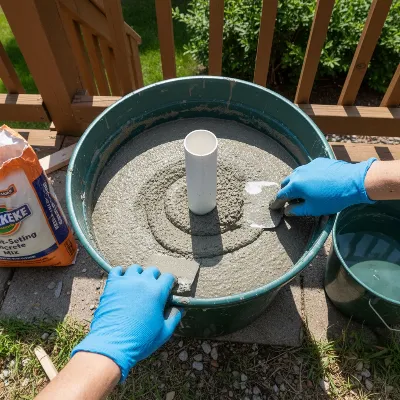 DIY weighted patio umbrella base made from concrete and a bucket mold
 -
Sandbags/Water Bags: For temporary or additional weighting, specially designed sandbags or water bags can be placed over the feet of cross-base umbrella stands or directly on top of smaller bases. These are relatively inexpensive, easy to fill, and can be removed when not needed. Ensure they are securely positioned to prevent them from sliding off.
Anchoring Your Umbrella
While a heavy base keeps the umbrella from tipping, anchoring connects it directly to a fixed point, preventing both tipping and sliding.
-
Deck Mounts/Flanges (DIY Adaptation): For umbrellas positioned on a wooden deck, a deck mount or flange offers superior stability. These are typically metal plates that bolt directly to the deck surface. While many are commercially available, a DIY approach could involve fabricating a sturdy wooden or metal bracket that screws into the deck joists and tightly clamps around the umbrella pole. Always ensure you are screwing into structural joists and not just deck boards to guarantee sufficient hold.
-
Tie-Down Straps and Bungees: For a flexible and often temporary solution, tie-down straps or heavy-duty bungee cords can secure your umbrella to existing outdoor structures. Attach straps from the umbrella pole or ribs to deck railings, heavy patio furniture, or even sturdy fence posts. Ensure the straps are pulled taut and are positioned to minimize chafing against the umbrella pole or fabric. This method is especially useful for quickly securing an umbrella when unexpected winds arise.
-
Ground Anchors for Grass/Soil: If your umbrella is on a lawn or in a garden bed, screw-in ground anchors (similar to those used for tents or dog tethers) can provide a solid attachment point. Simply screw the anchor into the soil until it’s firm, then use a tie-down strap or rope to connect it to your umbrella pole. This is a good option for freestanding umbrellas in grassy areas, offering more stability than just a base alone.
Choosing the Right DIY Method for Your Space
The best DIY solution often depends on your specific outdoor environment and the size of your umbrella.
- Deck vs. Patio vs. Lawn: Decks often lend themselves to bolted mounts or tying to railings. Patios are ideal for heavy bases, either custom-poured or filled. Lawns can utilize ground anchors.
- Umbrella Size: Larger umbrellas will always require more robust weighting and anchoring solutions.
- Local Wind Conditions: If you live in a particularly windy area, a combination of a heavy base and an anchoring system will provide the most security.
- Budget: DIY solutions are inherently cost-effective, but some (like custom concrete) require a small material investment.
Often, a combination approach yields the best results. For instance, pairing a heavy, custom-made concrete base with tie-down straps to a sturdy pergola provides maximum resistance against strong winds.
Practical Tips for Patio Umbrella Maintenance and Wind Safety
Beyond the initial setup, ongoing maintenance and responsible use are key to keeping your patio umbrella secure and extending its lifespan.
-
Regular Inspections: Make it a habit to periodically inspect your umbrella. Check for any signs of wear and tear on the canopy fabric, paying attention to small tears or fraying that could worsen in wind. Examine the frame for loose screws, bent ribs, or cracks in the pole. Also, ensure that any securing points, straps, or anchors are still firmly in place and not showing signs of fatigue or corrosion. Addressing small issues promptly can prevent larger problems.
-
Close When Not In Use or Windy: This is the simplest yet most effective tip for preventing your umbrella from blowing away. When you’re not using your umbrella, or if you anticipate strong winds, always close it and secure it with its tie strap. This drastically reduces the surface area exposed to wind, eliminating the primary cause of instability. Many experts recommend closing umbrellas when winds exceed 10-20 mph.
-
Clean and Store Properly: Keep your umbrella clean to prevent mold and mildew, which can degrade the fabric and weaken its integrity. When the outdoor season ends, or during periods of extended bad weather, store your umbrella in a dry, sheltered location. If possible, remove the canopy and store it separately from the frame. Proper storage not only extends the umbrella’s life but also ensures all components are in good condition for future stable use.
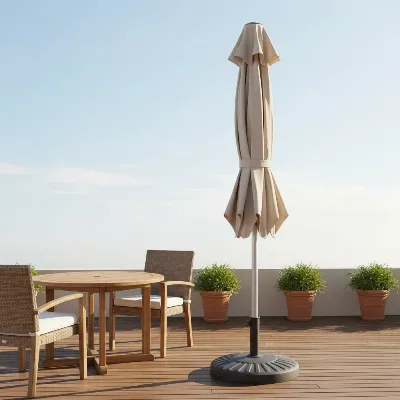 Closed patio umbrella secured with a tie strap on a deck patio
Comparison Table: DIY Stability Solutions
| Solution Type | Pros | Cons | Best For |
|---|---|---|---|
| DIY Weighted Base | Highly customizable, very heavy, cost-effective | Can be challenging to move, requires some DIY effort | Patios, decks with existing bases, high-wind areas |
| Deck Anchoring | Extremely secure, permanent, prevents tipping and shifting | Requires drilling into deck, more permanent modification | Decks, balconies, areas needing maximum security |
| Tie-Down Straps | Highly flexible, temporary or permanent, adaptable to various anchors | Less aesthetic, requires existing anchor points or additional setup | Temporary strong winds, versatile outdoor spaces |
| Ground Anchors | Good for soft ground, portable anchors, discreet when not in use | Less stable than concrete, visible anchor points when in use | Lawns, gardens, temporary setups, camping |
Expert Insights on Patio Umbrella Stability
“Many people underestimate the force of wind on a large canopy. A proper weighted base is your first line of defense, but for true peace of mind, especially in open or high-wind areas, integrating an anchoring system is crucial. Combining methods significantly reduces the risk.” – Alex Stone, Outdoor Furniture Engineer
Frequently Asked Questions
How much weight do I need for my patio umbrella base?
The required base weight depends on your umbrella’s size and design. A general rule of thumb is 50 lbs for a 7.5-foot umbrella, 70 lbs for a 9-foot umbrella, and 100+ lbs for 10-11 foot models. Cantilever umbrellas often demand significantly more weight, sometimes over 200 lbs, due to their offset design. Always consider your local wind conditions, as gusty areas will require heavier bases.
Can I use sand or water to weigh down my umbrella base?
Yes, you can use sand or water to fill hollow umbrella bases. Sand is generally preferred over water because it provides more weight per volume and won’t freeze and potentially crack the base in colder temperatures. However, for the most stability, especially with larger umbrellas, solid concrete or specially designed weighted plates are often more effective.
Is it safe to drill into my deck to secure an umbrella?
Drilling into your deck can be a safe and highly effective way to secure an umbrella, provided it’s done correctly. Use appropriate deck mounts or flanges and ensure you are screwing into the deck joists for maximum structural integrity, not just the surface boards. If you are unsure about your deck’s structure or load-bearing capacity, it’s always best to consult a professional to avoid damage.
What features make a patio umbrella more wind-resistant?
Key features that enhance an umbrella’s wind resistance include wind vents in the canopy (which allow air to escape, reducing uplift), a sturdy aluminum or steel pole with a wider diameter, and reinforced fiberglass ribs that can flex without breaking. A crank lift system also allows for quick and easy closing, which is the best defense against strong winds.
Conclusion
Securing your patio umbrella against the whims of the wind is not just about convenience; it’s about protecting your investment, enhancing safety, and maintaining the tranquility of your outdoor living space. By understanding the forces at play and implementing these effective DIY solutions, you can significantly improve the stability of your outdoor umbrella. Whether you opt for a heavy custom-poured concrete base, a strategic anchoring system, or a combination of methods, the power to create a secure outdoor sanctuary is well within your reach. Which DIY solution will you try first to safeguard your outdoor oasis?
Get our weekly buyer guide
Practical specs, not advice. Unsubscribe anytime.
